No Domain in Shopping Cart
TL;DR
-
Bad faith is the test: Cybersquatting means registering a domain in bad faith to profit from someone else's trademark. A for-sale page alone doesn't qualify.
-
Harmful sites come first: For phishing or impersonation, report abuse to the registrar and web host.
-
UDRP transfers, URS suspends: A UDRP complaint can move the domain to you. The URS only suspends it.
-
Weak case, different path: If the owner has a fair claim, buying the name or choosing a stronger one is often faster.
-
Prevention costs less: Trademark early, register key variations, and watch for look-alike domains.
You've picked a name and gone to grab the domain. Someone already owns it, and the page offers it back to you at a steep price.
This is common, and it's often fixable. Your best move depends on how strong your rights are, how the owner behaves, and what you're willing to spend. This guide is general information, so speak with a domain attorney before filing anything.
What is cybersquatting?
Cybersquatting is registering or using a domain name in bad faith to profit from someone else's trademark. Common goals include reselling the name at an inflated price, diverting traffic, and impersonating the brand.
Owning a domain someone else wants doesn't make the owner a cybersquatter.
Is cybersquatting illegal? How to spot a bad-faith registration
The three things a dispute panel checks
Under paragraph 4(a) of the UDRP, you must prove all three:
-
Confusing similarity: The domain is identical or confusingly similar to a mark you have rights in. Unregistered rights count only if you can show the public links the name to your business.
-
No legitimate interest: The owner has no genuine right to the name.
-
Bad faith: The domain was registered and is being used in bad faith.
If the domain was registered before your brand existed, bad faith is very hard to prove.
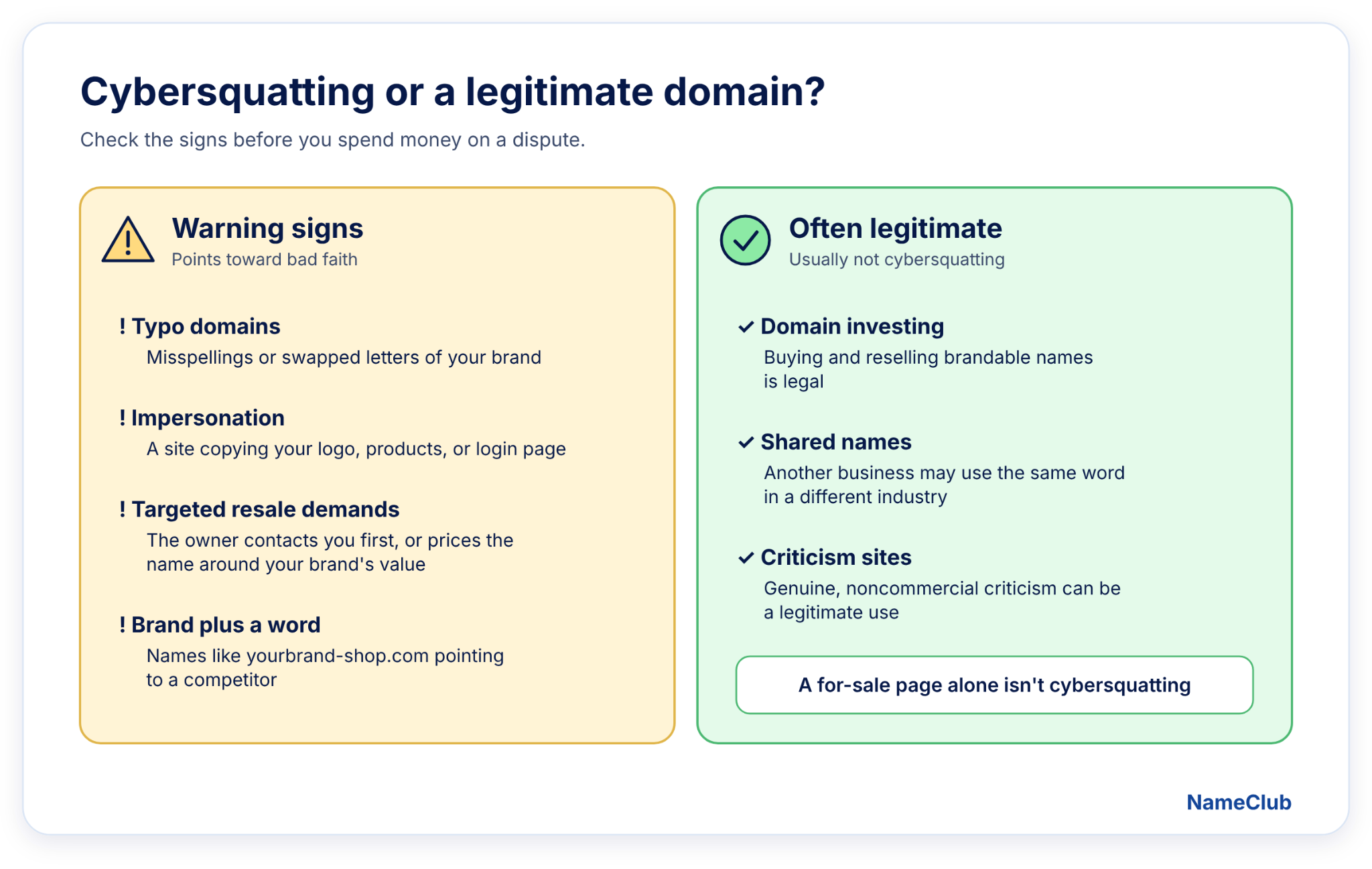
Warning signs of cybersquatting
-
Typo domains: Misspellings or swapped letters of your brand
-
Impersonation: A site copying your logo, products, or login page
-
Targeted resale demands: The owner contacts you first, or prices the name around your brand's value
-
Brand plus a word: Names like yourbrand-shop.com pointing to a competitor
When a similar domain is legitimate
-
Domain investing: Buying and reselling brandable names is legal.
-
Shared names: Another business may use the same word in a different industry.
-
Criticism sites: Genuine, noncommercial criticism can be a legitimate use
How to find out who owns a domain (and what evidence to save)
Look up the owner with ICANN Lookup
Start with ICANN's free RDAP Lookup tool. RDAP was built to replace WHOIS, and since January 2025 most generic-domain registries no longer have to offer WHOIS. Many owners use privacy services, so you may only see the registrar, which can often forward a message.
Save evidence before you reach out
-
Screenshots: Dated captures of the site and any for-sale page
-
Redirects: Where the domain sends visitors
-
Sale offers: Listings, emails, and prices
-
Your proof: Trademark records and the date you started using your brand
How to contact the owner safely
Keep it short and neutral, and let the owner name a price. For example: "Hi, I'm interested in [domain]. Is it available, and what are your terms?" Avoid threats, since a heated exchange rarely helps you later.
What to do when someone registers your brand's domain
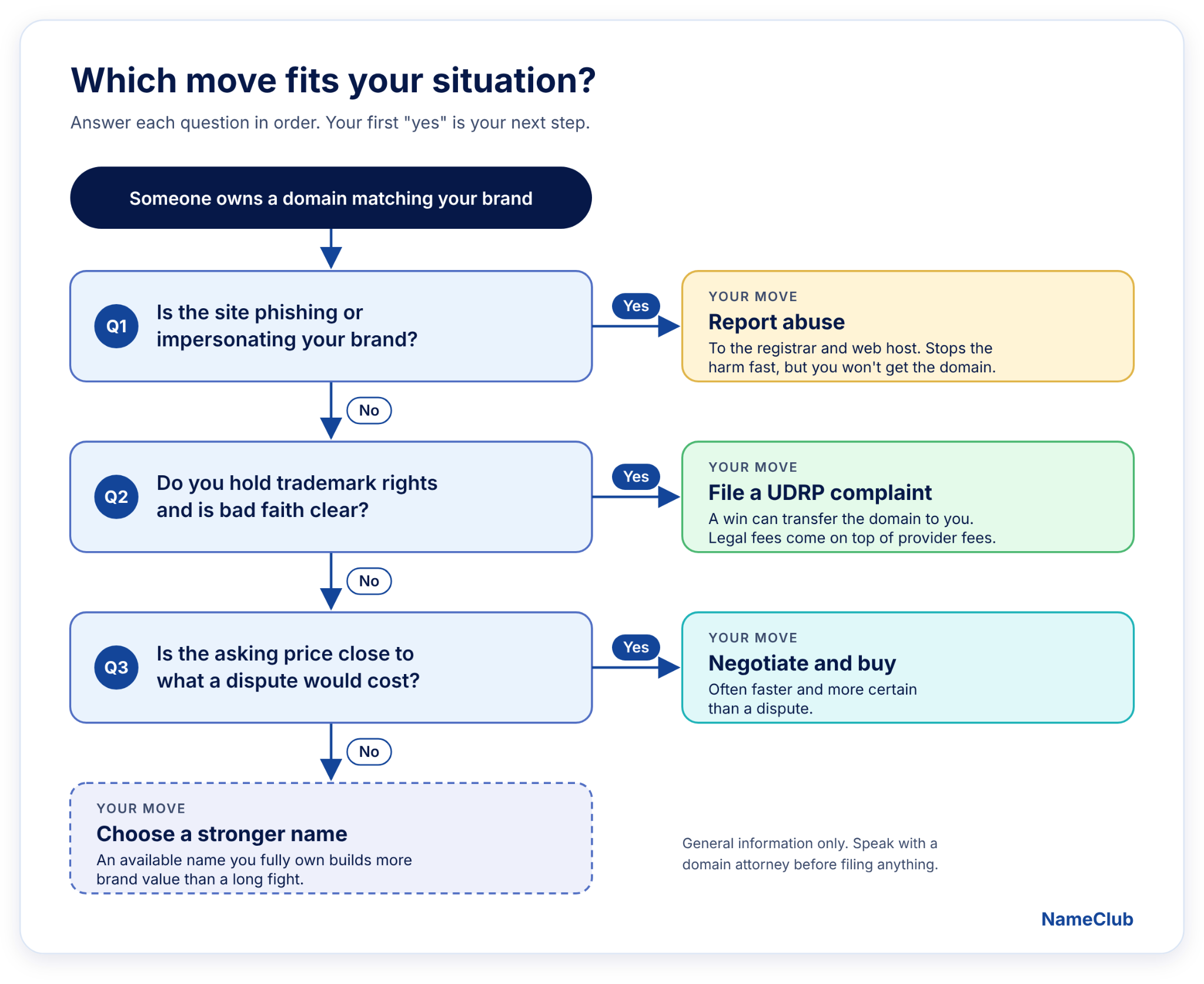
If the site is phishing or impersonating you
Your move: report abuse to the registrar and web host. This is usually the fastest way to stop harm, though you won't get the domain. If you also want ownership quickly, WIPO's expedited UDRP track aims for a decision within one month.
If you hold a trademark and bad faith is clear
Your move: file a UDRP complaint for transfer. WIPO's fee schedule lists $1,500 for one to five domains with a single panelist, or $4,000 for the expedited track. Legal fees come on top.
The Uniform Rapid Suspension (URS) is cheaper and faster. However, it only suspends the domain, requires clear and convincing evidence, and isn't available for .com.
US brands can also sue under the ACPA, where courts can award statutory damages of $1,000 to $100,000 per domain.
If the owner simply wants to sell
Your move: negotiate. An investor who registered the name before your brand existed usually has the stronger position, so treat it as a purchase.
If your case looks weak overall, the next section is for you.
When buying the domain makes more sense
Provider fees, legal help, and months of waiting add up, with no guaranteed result. If the asking price is close to what a dispute would cost you, buying is often faster and more certain.
How to judge a fair asking price
-
Comparable sales: Check what similar names sold for on aftermarket platforms.
-
Brand value: Weigh how central the exact name is to your plans.
-
Payment terms: NameClub is a domain marketplace. Eligible listings there support monthly installments, and transfers run through Dynadot, an ICANN-accredited registrar.
When a new name is the smarter move
If the owner holds clear rights and wants far more than your budget, step back. A stronger available name you fully own will build more brand value than a long fight over one you may never get.
How to protect your brand's domain from cybersquatting
-
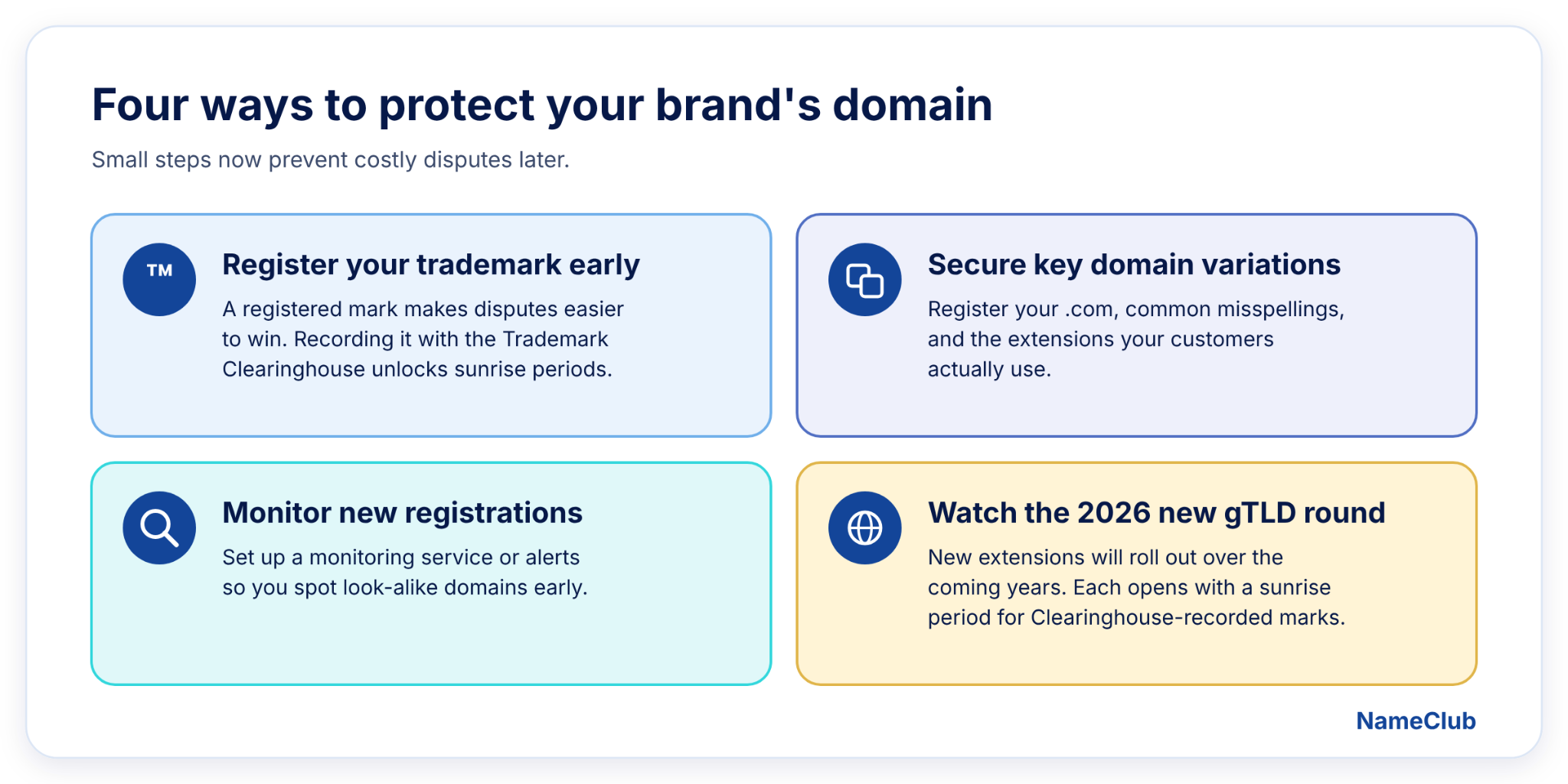
Register your trademark early: A registered mark makes disputes easier to win. Recording it with the Trademark Clearinghouse also lets you claim exact-match names during sunrise periods, before new extensions open to the public.
-
Secure key domain variations: Register your .com, common misspellings, and the extensions your customers actually use.
-
Monitor new registrations of your name: Set up a monitoring service or alerts so you spot look-alike domains early.
-
Watch the 2026 new gTLD round: ICANN's 2026 application window closed in August with more than 1,600 applications, so new extensions will roll out over the coming years. Each one opens with a sunrise period for Clearinghouse-recorded marks, and the URS covers these newer endings.
FAQs
I registered my business name. Doesn't that give me the right to the domain?
No. A business or company registration doesn't create rights to a matching domain. Domains are first-come, first-served, and dispute panels look at trademark rights and bad faith. A descriptive name is especially hard to protect.
Can I get a domain back if the owner isn't using it?
Possibly, but non-use alone isn't enough. You still need to show trademark rights and bad faith, such as targeted resale demands or a pattern of grabbing brand names. If the name is generic or was registered before your brand, buying it is usually more realistic.
Is it illegal to buy domains and resell them?
No. Domain investing is a legal business, and a for-sale page doesn't make someone a cybersquatter. It becomes a problem when the owner targets a specific trademark to profit from it.
How much does it cost to file a domain dispute?
WIPO's provider fee for a standard UDRP case starts at $1,500 for one to five domains with a single panelist. The expedited one-month track costs $4,000. Lawyer fees are separate, so confirm current pricing before you budget.
Can I use the URS for a .com domain?
No. The URS covers newer generic extensions, so a .com dispute goes through the UDRP or a court case. Keep in mind that the URS only suspends a domain and never transfers it to you.