No Domain in Shopping Cart
TL;DR
-
Three checks: A business name is usable when it clears a trademark search, a domain check, and a social handle check.
-
Trademark first: A trademark conflict is the hardest problem to fix, so check it first.
-
LLC limits: Registering an LLC doesn't give you a registered trademark.
-
Taken domains: A taken .com is often for sale.
-
Flexible handles: A small variation on a social handle is usually fine.
Many founders assume an LLC filing settles whether a name is available. A state filing mainly stops another company from forming under the same name in that state. As the USPTO explains, trademark rights come from using a name to sell goods or services, and unregistered rights only reach the area where you do business.
We'll run a made-up candle brand, Brightloom, through each step.
Step 1: Check if your business name is trademarked
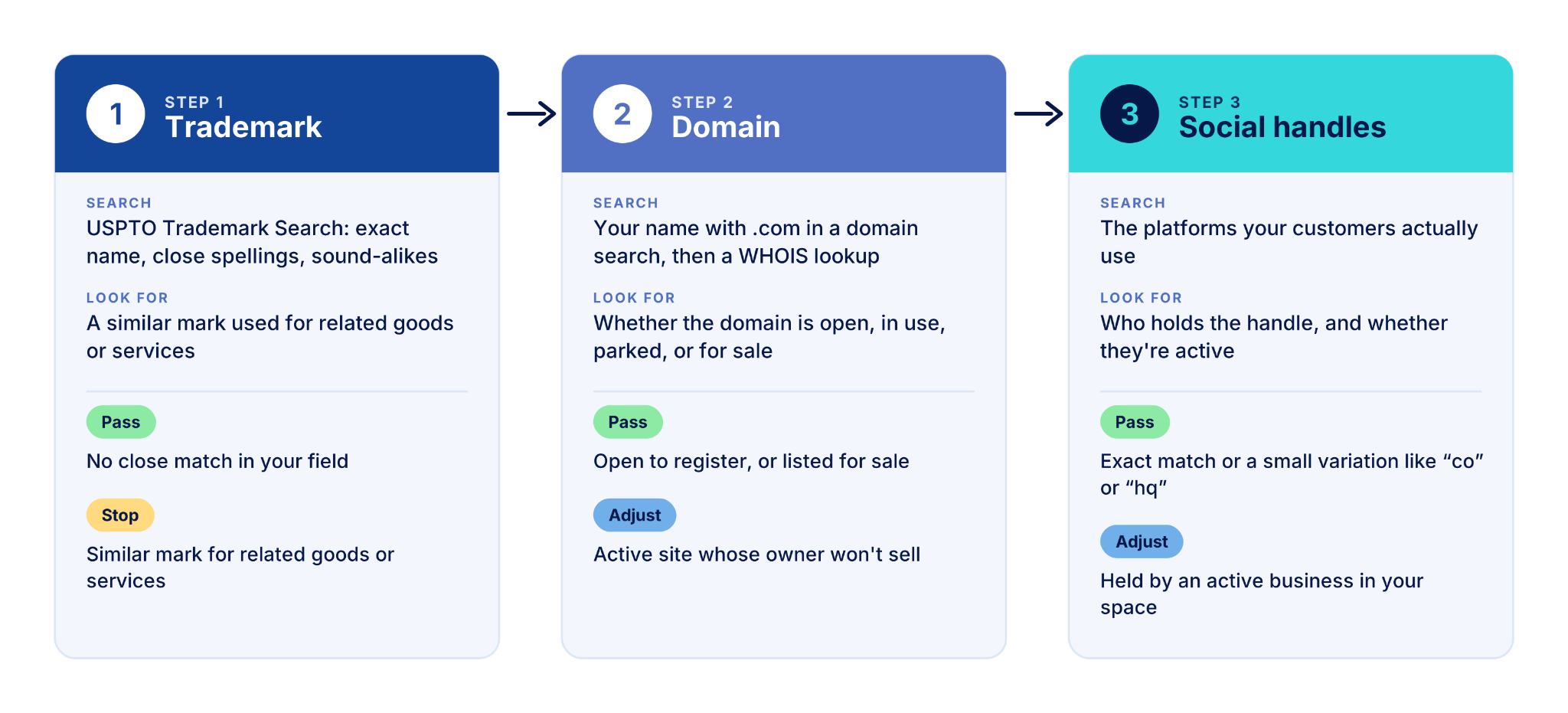
Start here. Search the USPTO's free Trademark Search system for your exact name, close spellings, and sound-alikes.
The USPTO calls the risk you're screening for a likelihood of confusion. It weighs two things:
-
Similar marks: Names that look, sound, or mean nearly the same as yours.
-
Related goods and services: Marks used for products or services close to what you sell.
When both show up together, we'd pick another name. This search is a first screen and isn't legal advice, so bring close calls to a trademark attorney.
Brightloom: Say the search finds a "Brightloom" mark for accounting software and nothing for candles. Note it and move on.
Step 2: Check if the domain name is available
Search your exact name with .com in any domain search tool. A "taken" result is often where your best options start.
Run a WHOIS lookup to see the domain's registrar. Many lookup tools now pull this data through RDAP, a newer protocol that works alongside WHOIS. Owner details are often hidden, but ICANN's Registration Data Policy requires registrars that hide them to offer an anonymized email or web form for reaching the owner.
Then visit the domain to see whether it's in use, parked, or for sale.
Step 3: Check social media handle availability
Search your name on the platforms your customers use. Free handle checkers scan many networks at once.
Small variations, like adding "co" or "hq," are easy for customers to follow. The real warning sign is a handle held by an active business in your space.
Inactive handles: Message the owner, but don't count on the platform stepping in. X's inactive account policy, for example, says it can't release inactive usernames.
Brightloom: Say @brightloom is dormant and @brightloomco is open. That's a pass with a small adjustment.
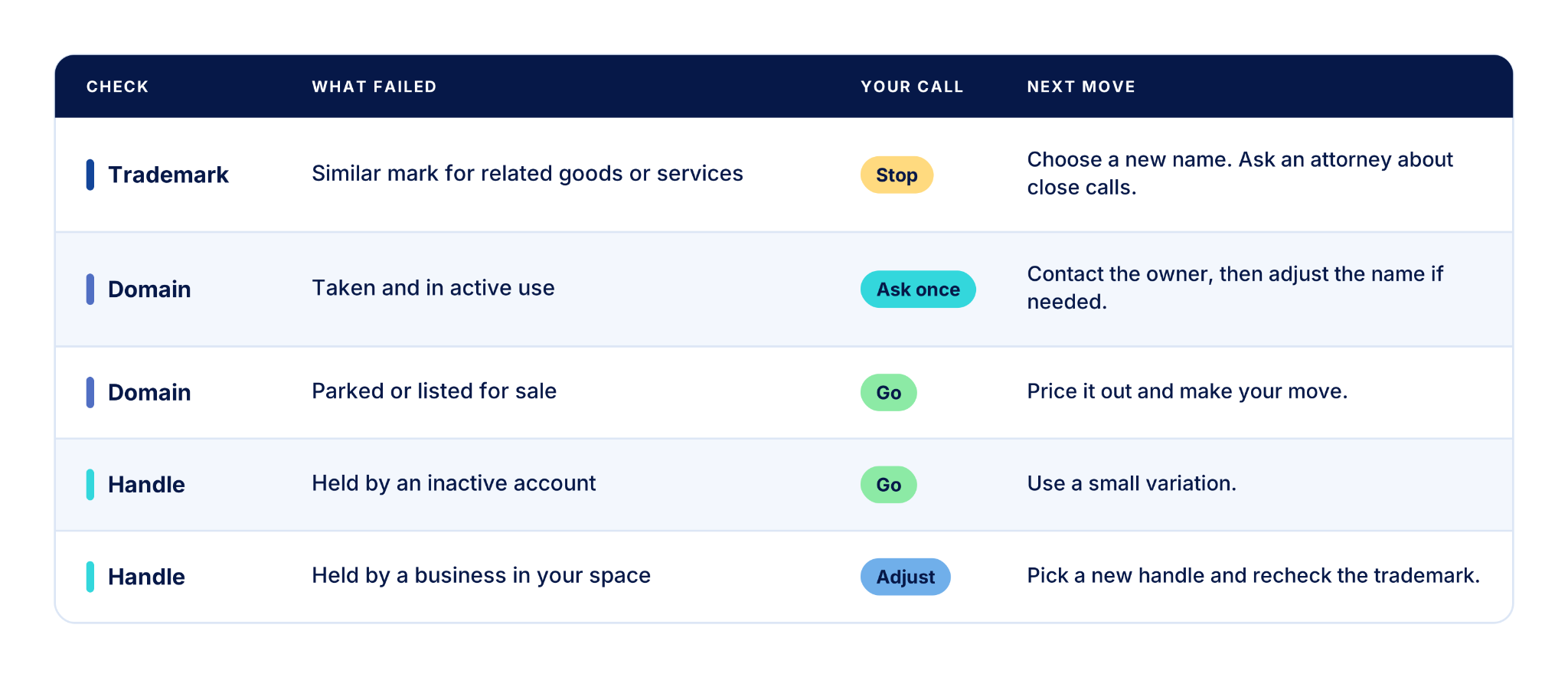
What to do if your business name fails a check
Only a trademark conflict is a stop.
What to do if your domain name is taken
If the .com is for sale, buying it usually beats settling for a hyphen or an awkward extension. It's the address customers type, share, and remember.
How to tell if a domain is parked or for sale
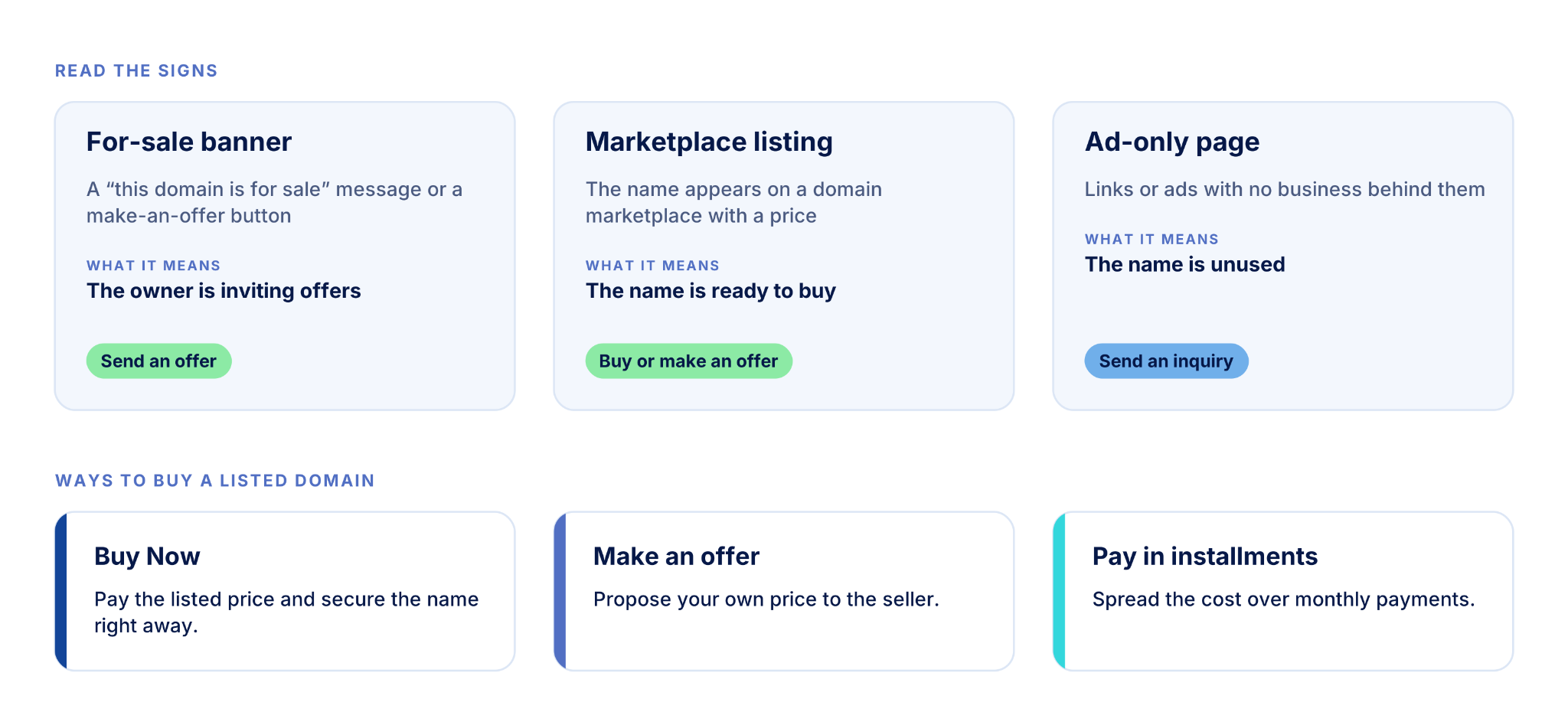
A parked domain is registered but isn't running a real website. Read the signs:
-
For-sale banner: The owner is inviting offers.
-
Marketplace listing with a price: The name is ready to buy.
-
Ad-only page: The name is unused, so an inquiry is worth sending.
How to buy a domain from its current owner
NameClub is a domain marketplace, so we have a stake in this answer. On a NameClub listing, the seller decides which buying options apply:
-
Buy Now: Pay the listed price and secure the name right away.
-
Make an offer: Propose your own price.
-
Pay in installments: Spread the cost over monthly payments.
Per the NameClub FAQ, you choose where the domain lands at checkout, and it arrives within an hour to five business days. NameClub is built by Dynadot, an ICANN-accredited registrar.
For unlisted domains, contact the owner through the site or the registrar's contact form, and use a secure payment service so the money and the domain change hands together.
FAQ
Does registering an LLC protect my business name?
Only partly. An LLC filing generally keeps another company from forming under the same name in your state. It doesn't stop a business elsewhere from using the name, and it doesn't give you a federal trademark.
Can I use a business name that's trademarked in a different industry?
Sometimes. Trademark conflicts usually turn on whether the goods or services are related, so the same name can exist in unrelated fields. Industries that seem different can still overlap in the eyes of the law, so have an attorney review any close match.
Can I use a business name that another company uses in a different state?
State registration doesn't settle this. If the other company holds a federal trademark or is likely to expand into your market, sharing its name carries real risk. Run the trademark search before you commit.
Someone owns the .com but isn't using it. Can I get it?
Often, yes. Many unused domains are parked by owners willing to sell, so check for a for-sale page or marketplace listing, or reach the owner through the registrar's contact form. Owning a trademark doesn't automatically give you a domain someone else registered first.
Should I pick a different name if my handle is taken on one platform?
Usually not. A small variation on one platform rarely hurts a brand. Change course only if the handle belongs to an active business in your space, since that points to a bigger name conflict.