No Domain in Shopping Cart

Summary
-
Prepare the domain first: Check that it isn't under a transfer lock, and move your email and logins to another domain.
-
Price it from real sales: What similar names recently sold for is a better guide than an automated appraisal.
-
Get paid before you hand it over: Transfer the domain only after a marketplace or trusted third party is holding the buyer's payment.
Selling a domain is a priced deal. Here's how founders with a retired name can price it, sell it safely, and know what they'll keep.
Prepare your domain before you list it
A transfer lock can push your timeline back by weeks, so start here.
-
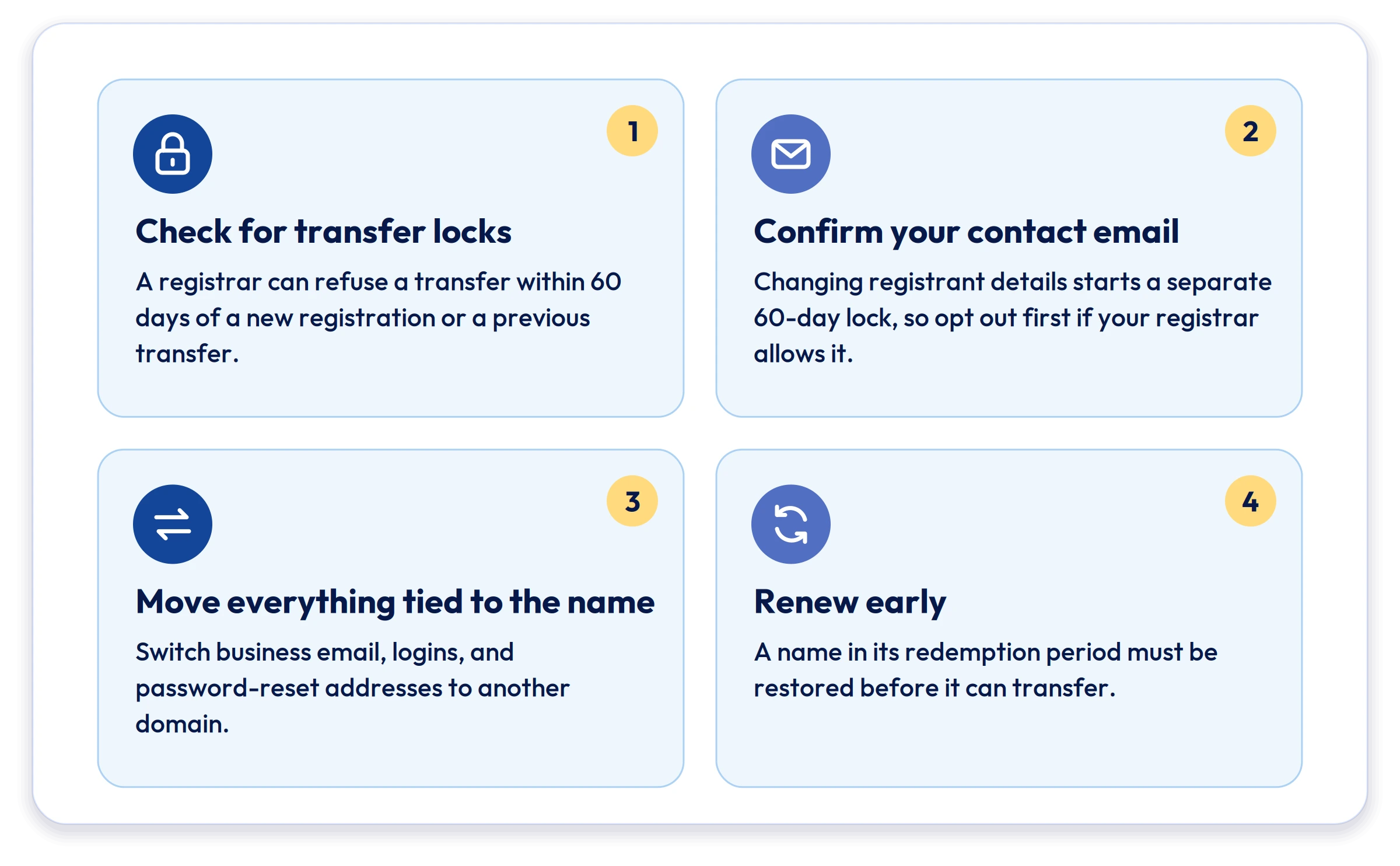
Check for transfer locks. Under ICANN's transfer rules, a registrar can refuse a transfer within 60 days of a new registration or a previous transfer. Confirm current lock periods with your registrar.
-
Confirm your contact email. Transfer requests go to the email on file. Changing the registrant name, organization, or email starts a separate 60-day lock, so opt out first if your registrar allows it.
-
Move everything tied to the name. Switch business email, logins, and password-reset addresses to another domain.
-
Renew early. A name in its redemption period must be restored before it can transfer.
How much is your domain worth?
Your domain is worth what a real buyer will pay. Recent sales of names with the same extension, length, and style are your best guide. DNJournal tracks headline deals, so check a broad database like NameBio too.
Automated appraisals give a rough range. If clear comps exist, skip the paid appraisal.
Pick your pricing model
-
Buy Now: A fixed price buyers pay instantly. Use it when comps point to a clear number.
-
Make an Offer: Buyers propose a price. Set your lowest acceptable number first.
-
Both: Attracts decisive buyers and negotiators.
-
Installments: Buyers pay monthly. Add this on higher-priced names.
Where should you sell your domain?
For a first sale, choose a marketplace with built-in payment protection.
Marketplace: Best for most first-time sellers. The trade-off is that you typically pay a commission when the domain sells.
Broker: Best for high-value domains where negotiation is important. The trade-off is paying a commission and having less control over the sales process.
Direct outreach: Best when you know or can identify an obvious potential buyer. The trade-off is that you’re responsible for handling payment protection and the domain transfer yourself.
NameClub also offers brokerage help when you list.
How long does it take to find a buyer?
There's no standard timeline. Well-priced names can sell quickly, while niche names may wait months.
How much will you actually keep?
Your net payout is the sale price minus the platform's commission. NameClub's commission rate is 10%, charged only when your domain sells.
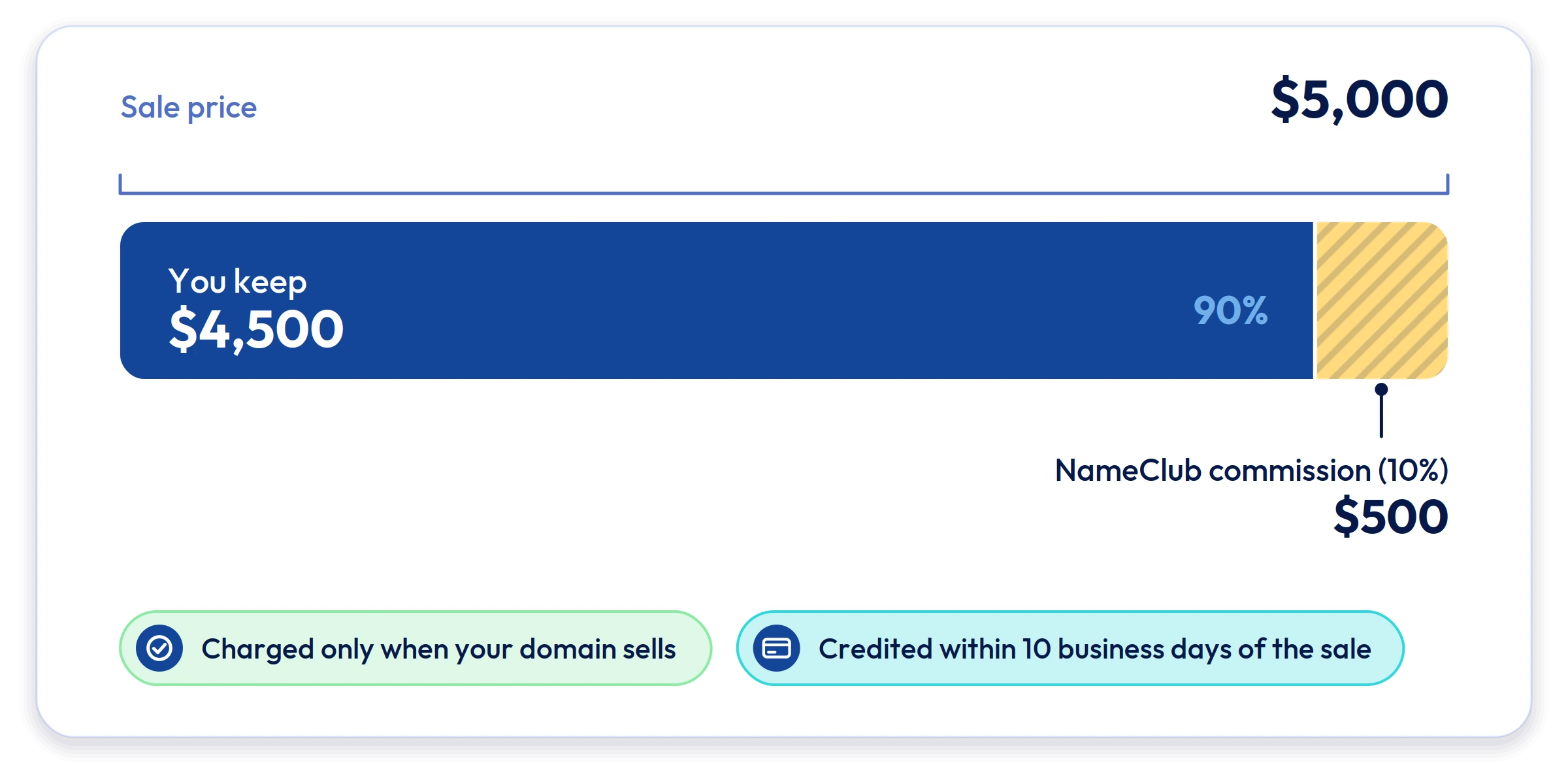
Under NameClub's terms, your account is credited within 10 business days of the sale. Installment sales are credited as each payment arrives.
Other marketplaces' rates vary, so check their seller terms. Fees last verified September 2026.
Create a listing buyers trust
You can sell on NameClub without moving your domain. Import it through your registrar's API, or verify ownership with a Name Server, TXT, or CNAME record. Then:
-
Set your price: Buy Now, offers, or both, with optional installments.
-
Add a custom logo: It helps the name read as a brand.
-
Pick a page template: Choose how your for-sale page looks.
-
Add a description: Write one or generate it with AI.
-
Choose a category: Help buyers find the name by industry.
Investors can bulk-list several domains.
How do you get paid safely?
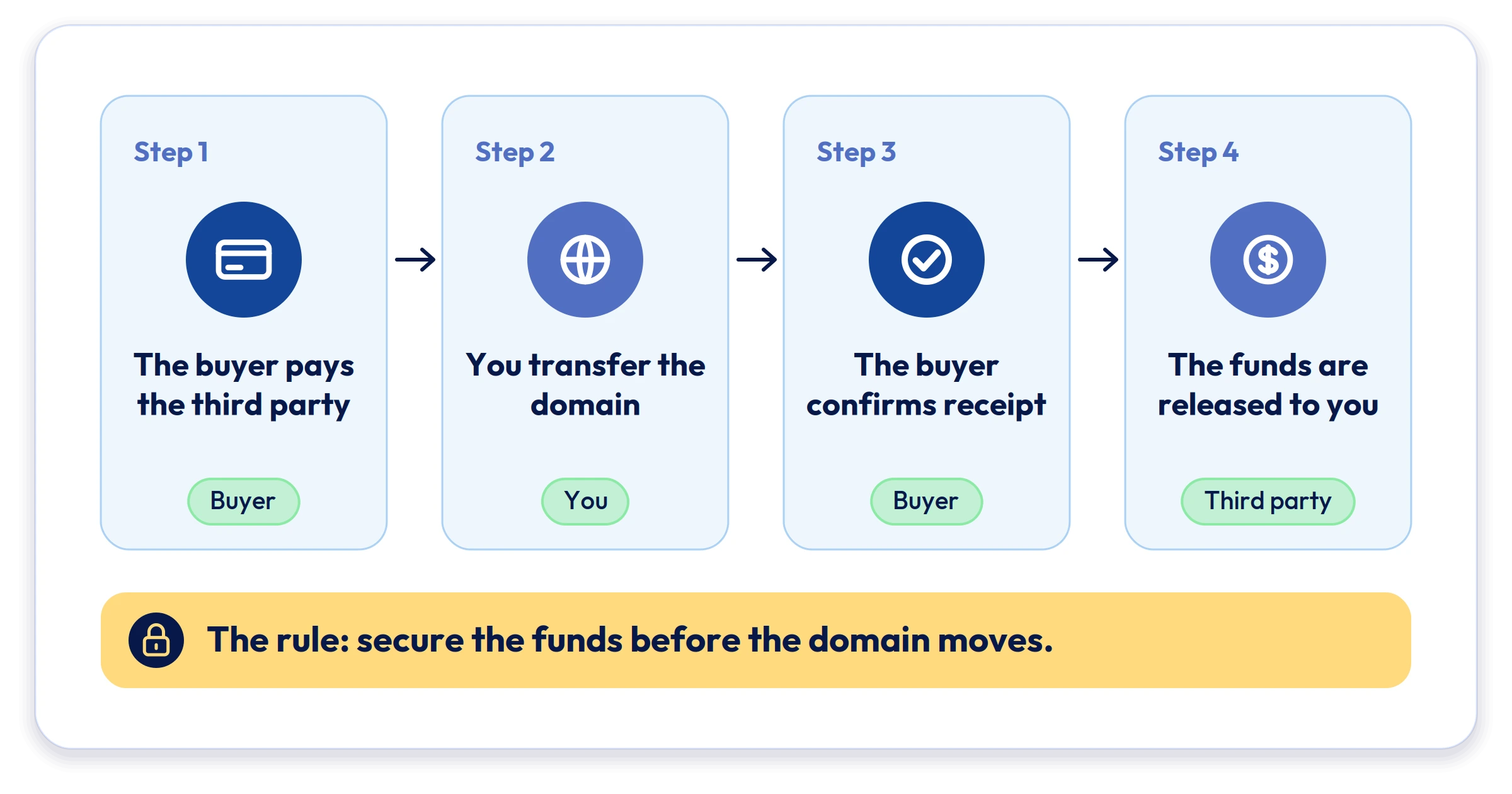
Escrow means a neutral third party holds the buyer's payment until the domain transfer is complete:
-
The buyer pays the third party.
-
You transfer the domain.
-
The buyer confirms receipt.
-
The funds are released to you.
For direct sales and broker deals, DynaPay, Dynadot's Domain Transfer Service, holds payments and releases them after ownership is verified. It currently lists a flat $20 fee on transactions of $2,000 or more.
Red flags:
-
Off-platform requests: A buyer asks you to skip the platform to "save fees."
-
Upfront fees: Someone wants payment for an appraisal or listing.
-
Screenshot "proof": A buyer sends an image of a payment you can't confirm.
How to transfer your domain to the buyer
-
Unlock the domain at your registrar.
-
Get the authorization code (EPP or auth code). ICANN requires registrars to provide it within five calendar days.
-
Share the code with the buyer, or follow your platform's steps.
-
Approve the transfer if your registrar asks.
-
Confirm completion so the funds are released.
Frequently asked questions
Someone emailed me offering to buy my domain. What should I do?
Check recent sales of similar names before you reply, so you know whether the offer is fair. You can negotiate, counter, or decline. If you accept, close through a marketplace or a trusted third party that holds the buyer's payment before you transfer anything.
The buyer wants to use a payment service I've never heard of. Is that safe?
Be cautious, because a service you can't verify gives you no real protection. Suggest a marketplace or a payment service you can research yourself. Never transfer the domain just because an email says the funds are being held.
Can a buyer reverse the payment after I hand over the domain?
Payments sent straight to you, especially by card or PayPal, can be disputed after the transfer. A marketplace or third-party payment service lowers that risk because it collects the buyer's money and pays you out under its own terms. Keep records of the agreement and the transfer either way.
Can I sell a domain I registered recently?
You can list it, but the handoff may have to wait. Under ICANN's rules, a registrar can refuse a transfer to another registrar within 60 days of a new registration. Check the lock status before you promise a buyer a delivery date.