Nessun dominio nel carrello
Ti sei mai chiesto perché "Kodak" sembra scattante mentre "Volvo" suona robusto? Non stai pensando troppo: c'è una vera scienza dietro il motivo per cui certi nomi di marca colpiscono in modo diverso. Benvenuto nel selvaggio mondo del simbolismo fonetico nei nomi di marca, dove i suoni hanno più peso di quanto pensi.
I suoni giusti per un nome possono far sì che il tuo brand rimanga in testa a qualcuno come quella canzone che non riesci a toglierti. E quelli sbagliati? Beh, sono il motivo per cui oggi non guidiamo tutti una Ford Edsel.
Che cos'è il simbolismo fonetico?
La scienza del simbolismo fonetico si riferisce alle associazioni non arbitrarie tra le proprietà linguistiche dei suoni del parlato e i loro significati. Immagina: "Bouba" suona naturalmente rotondo e traballante, mentre "Kiki" suona affilato e frastagliato. Non è casuale: il tuo cervello è cablato per collegare certi suoni a forme, sensazioni e attributi specifici.
Questo non è nemmeno un qualche gergo del marketing. Il dibattito sui suoni fonetici e il loro significato risale ad almeno il 400 a.C., e quasi un secolo fa, Köhler e Sapir hanno entrambi dimostrato con dati empirici l'esistenza del simbolismo sonoro . Il tuo subconscio elabora costantemente queste connessioni tra suono e significato, che tu te ne renda conto o no.
Perché il simbolismo fonetico nei nomi di marca è importante?
Ecco dove diventa interessante per chiunque stia costruendo un marchio. I nomi di maggior successo – pensa Pentium, Black Berry, Sonos, Swiffer – sono stati sviluppati usando una forma scientifica di linguistica chiamata simbolismo fonetico. Non erano semplici colpi di fortuna.
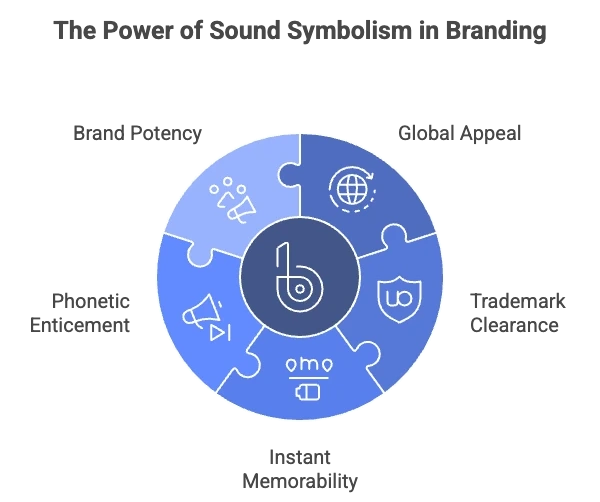
I nomi di marca oggi devono lavorare più che mai. Devono avere un appeal globale, superare la verifica di disponibilità del marchio ed essere immediatamente memorabili. Il simbolismo fonetico può diventare cruciale quando si creano nomi di marca da zero, soprattutto quando si ha a che fare con parole nuove. Pensaci: quando senti "Quell" (un dispositivo indossabile per alleviare il dolore), la doppia l alla fine lo rende foneticamente accattivante e potente dal punto di vista del simbolismo fonetico.
In che modo l'attrattiva fonetica può influenzare il comportamento dei consumatori?
Il simbolismo fonetico nei nomi di marca agisce su livelli multipli . I partecipanti preferivano di più i nomi di brand quando gli attributi connotati dai suoni vocalici erano positivi per una categoria di prodotto, ma preferivano di meno gli stessi nomi quando gli attributi connotati erano negativi.
Traduzione? Se vendi qualcosa di piccolo e preciso (come un rasoio), le vocali anteriori lavorano a tuo favore. Ma se stai promuovendo un camion per lavori pesanti, quegli stessi suoni potrebbero giocare contro di te. Nei nomi di marca, vocali anteriori—come la “i” in Nike —trasmettono leggerezza e piccolezza, mentre le vocali posteriori—come la “o” in Volvo—evocano pesantezza e grandezza.
Che ruolo gioca il suono nel riconoscimento del marchio?
Gli schemi acustici distinguono il memorabile dal dimenticabile. I nomi di marca che iniziano con “k” appare più spesso rispetto al suo uso quotidiano L'inglese suggerirebbe, e si dice che questi nomi con “k” siano particolarmente memorabili ed efficaci per il riconoscimento del brand.
Ma non riguarda solo le parole con la K. Le plosive iniziali in generale (le consonanti occlusive come k, insieme ai suoni p, t, b, d, g) sono molto efficaci per il ricordo, il riconoscimento e la notorietà del marchio. Pensiamo a Coca-Cola, Pay Pal o Tik Tok: quelle consonanti dure catturano l'attenzione e restano impresse.
Come scegliere un nome di marca fonetico?
Per prima cosa, abbina il suono alla tua storia. Suoni acuti e netti come k o t aiutano a trasmettere precisione o efficienza, mentre i suoni vocalici morbidi come la o lunga nel brand di skincare Dove suggeriscono cura.
Vuoi suggerire velocità? Potresti sfruttare suoni fricativi come "z", "s", "v" e "f" – come ha fatto Zoom o Xoom di Pay Pal. Devi comunicare forza o stabilità? Quelle vocali posteriori e consonanti sonore sono tue alleate.
Ecco il piano d'azione:
-
Definisci prima gli attributi del tuo brand – Sei veloce, affidabile, lussuoso o alla mano?
-
Associa i suoni alle sensazioni – Fricative per la velocità, occlusive per la potenza, consonanti liquide per la scorrevolezza
-
Fai test tra culture diverse – Le proprietà del simbolismo sonoro sono rimaste costanti quando testate rispetto ad altre lingue

Quali suoni sono considerati più accattivanti?
Gli studi rivelano tendenze distinte. Il I suoni L e R scivolano via dalla lingua senza sforzo , mentre certe vocali evocano naturalmente sensazioni positive. Per esempio, la “o” lunga in parole come soothe (o Google) dà una sensazione calmante, e la “ee” in sweet ti fa praticamente sorridere mentre la pronunci.
I suoni ad alta frequenza (vocali anteriori, fricative e consonanti sorde) nei nomi di marca tendono ad essere associati a concetti legati a una valutazione più alta e a una potenza inferiore, mentre i suoni a bassa frequenza (vocali posteriori, occlusive e consonanti sonore) tendono ad essere associati più fortemente a concetti legati a una valutazione inferiore e a una potenza superiore.
Come allineare i valori del marchio alle scelte fonetiche?
Le tue scelte fonetiche dovrebbero rispecchiare la personalità del tuo brand. Il pattern fonetico ex- può implicare eccellenza o superiorità, come i brand come Expedia o Microsoft Excel . Non è una coincidenza – è un allineamento strategico.
| Attributo del brand |
Sound Choice |
Esempi |
| Velocità/Agilità |
Fricative (s, z, f, v) |
Zoom, Fastly |
| Forza/Potenza |
Occlusive (k, t, p, b) |
Kodak, Tik Tok |
| Lusso/Eleganza |
Consonanti morbide, suoni che scorrono |
Lush, Rolex |
| Precisione/Tech |
Consonanti aspre |
Intel, Microsoft |
Esempi di nomi di marca fonetici di successo
È il momento di entrare nello specifico. Analizziamo alcuni nomi di brand che hanno centrato in pieno il loro gioco fonetico e vediamo esattamente come ci sono riusciti. Non sono colpi casuali – ognuno dimostra che i suoni giusti possono trasformare un semplice nome in una macchina da marketing.
Esaminiamo alcuni vincitori:
-
Nike – Quella vocale anteriore "i" suggerisce leggerezza e agilità, perfette per l'attrezzatura sportiva.
-
Volvo – Quelle vocali posteriori trasmettono pesantezza e stabilità – esattamente ciò che vuoi in un marchio automobilistico.
-
Lush – Il suono arrotondato della l, la vocale dolce e la sh melodica e sibilante sono totalmente in linea con il brand per un'azienda di bellezza naturale.
-
Google – Il nome Google sembra più amichevole di quanto sarebbe se fosse stato scritto Gugle, e raddoppiare la consonante in alcuni punti di un nome di prodotto porta a giudicare il prodotto come dotato di più opzioni e funzionalità.
Nomi di marca falliti a causa di uno scarso simbolismo sonoro
-
Il disastro Edsel (Ford, 1957) - L'Edsel di Ford fallì in parte per il suo suono duro e gutturale che suggeriva "dead sell" a molti consumatori. Il cluster consonantico "ds" risultava goffo e sgradevole, contraddicendo il posizionamento di lusso.
-
Ayds Diet Candy - Questo prodotto per la perdita di peso ha dovuto cambiare brand a causa di una sfortunata somiglianza fonetica con l'AIDS. La lezione: testa sempre i nomi per potenziali associazioni negative.
-
La Cucaracha (Volkswagen, Messico) - "The Beetle" di VW tradotto in "The Cockroach" nei mercati spagnoli - la dura desinenza "ch" e l'associazione con l'insetto hanno ucciso le vendite.
-
Chevy Nova nei mercati spagnoli - "No va" significa "non va" in spagnolo - esattamente ciò che non vuoi per un brand automobilistico. La brusca desinenza "va" rafforzava il significato negativo.
In che modo le differenze culturali influenzano il simbolismo fonetico?
La parte migliore è che questo non è limitato all'inglese o alle lingue con scrittura latina. I ricercatori lo hanno esaminato in Tamil, coreano, himba , e molte altre lingue, e i risultati restano solidi su tutta la linea.
Le parole che connotano "little" in lingue diverse dall'inglese sono kleine (tedesco), petite (francese), piccola (italiano) e mikros (greco), tutte con suoni vocalici anteriori nella sillaba iniziale. Gli schemi valgono a livello globale, rendendo il simbolismo fonetico uno strumento universale per chi costruisce marchi.
Che ruolo gioca la tecnologia nel modificare l'attrattiva fonetica?
La comunicazione digitale cambia il modo in cui percepiamo i nomi di marca. I nomi devono funzionare nella ricerca vocale, suonare naturali quando vengono pronunciati ad Alexa e tradursi bene sulle piattaforme audio. Il simbolismo fonetico può trasmettere informazioni sul prodotto, aumentare l'affinità e incrementare le intenzioni di acquisto anche in contesti in cui l'audio è al primo posto.
La crescita di podcast, assistenti vocali e contenuti audio significa che l'attrattiva fonetica del nome del tuo brand conta più che mai.
In che modo i brand possono adattare i loro nomi per rimanere rilevanti?
I brand intelligenti monitorano come i loro nomi risuonano tra generazioni e piattaforme. Alcuni si riposizionano enfatizzando sillabe diverse nel marketing, mentre altri evolvono la loro identità visiva per completare il loro simbolismo sonoro.
Philip Morris si è ribattezzata Altria , scegliendo il nome ispirandosi alla parola latina Altus, che significa alto, rappresentando un'elevata prestazione di picco. Questo è il riposizionamento fonetico in azione.
Qual è il futuro del simbolismo sonoro nel branding?
Il futuro è tutta una questione di precisione. Dati recenti del 2020 e del 2024 mostrano che il simbolismo sonoro continua a influenzare le percezioni dei consumatori nei confronti dei marchi , e gli strumenti di IA stanno rendendo l'analisi fonetica più accessibile a chi costruisce brand.
Ci stiamo muovendo verso strategie fonetiche iper-mirate, in cui i brand possono testare il simbolismo dei suoni su dati demografici, lingue e contesti diversi prima di impegnarsi su un nome. La scienza sta diventando più precisa e le opportunità più grandi.
In conclusione: il simbolismo fonetico nei nomi di marca non è solo una fissazione da linguisti: è uno strumento strategico che può determinare il successo o il fallimento del modo in cui le persone si connettono al tuo marchio. I suoni che scegli oggi plasmano come i clienti pensano, sentono e si ricorderanno di te domani.
FAQs
Che cos'è il simbolismo sonoro e perché è importante nei nomi di marca?
Il simbolismo sonoro si riferisce all'idea che certi suoni o elementi fonetici evocano significati o sensazioni specifiche. Questo fenomeno gioca un ruolo cruciale nel naming di brand, perché influenza il modo in cui i consumatori percepiscono un brand.
Capire il simbolismo fonetico può aiutare nel processo di naming, rendendo un nome di marca più attraente e memorabile.
In che modo gli elementi fonetici influenzano il ricordo del marchio?
Gli elementi fonetici, come i suoni vocalici e le consonanti, hanno un impatto significativo sulla memorabilità del brand. I nomi facili da pronunciare e con una struttura fonetica piacevole tendono a essere più memorabili.
Per esempio, i nomi che usano allitterazione o schemi ritmici possono creare un effetto orecchiabile che fa rimanere il nome impresso nella mente dei consumatori.
Come varia il simbolismo sonoro tra culture diverse?
Il simbolismo fonetico varia davvero tra culture diverse, poiché contesti linguistici diversi possono attribuire significati unici a suoni specifici.
Per esempio, le vocali anteriori in alcune lingue possono essere associate alla leggerezza o alla positività, mentre le vocali posteriori potrebbero trasmettere profondità o serietà.
Come posso testare il simbolismo fonetico per il nome del mio brand?
Inizia con un semplice test A/B in cui presenti opzioni di nome a un pubblico target e misuri le risposte emotive, la memorabilità e le associazioni di attributi.
Quanto è importante il simbolismo fonetico rispetto al significato semantico?
Entrambi contano, ma il simbolismo fonetico spesso agisce prima a livello subconscio. La maggior parte dei brand di successo combina un forte significato semantico con scelte sonore strategiche.