장바구니에 도메인이 없습니다
Here's a number that should make every marketer pause: humans are 100 times more likely to remember a scent than something they see. Yet most brands are still playing the same tired visual game, fighting for attention in a world where consumers encounter up to 10,000 ads daily.
Meanwhile, smart brands are bypassing this noise entirely by speaking directly to the limbic system—the emotional center of the brain—through multi-sensory experiences that create memories lasting years, not seconds.
Think about it: when you walk into a Starbucks, you're hit with the coffee aroma before you even see the logo. That's not an accident. That's 63% of consumers craving multi-sensory brand experiences in action, and the brands that get it are cleaning up.
What is a Multi-Sensory Brand Experience?
A multi-sensory brand experience hits your customers through multiple senses at once. Instead of just showing them a pretty logo, you're creating a full sensory journey that engages sight, sound, scent, touch, and taste.
It's like the difference between seeing a photo of a pizza and walking into a pizzeria – the dough smell, the sizzle sounds, the warm atmosphere. One makes you scroll past. The other makes you hungry.
Research shows that multisensory experiences can improve brand recall by up to 70% compared to single-sense engagement. That's not just marketing fluff – that's your competitive edge.
Why is it Important for Brands Today?
Your customers are drowning in brand messages. 84% of U.S. consumers cite an in-store experience that engages their senses as the deciding factor between buying online or in-store.
Here's the kicker: sensory experiences bring 9 out of 10 shoppers back to stores. That's repeat business gold right there.
In a world where everyone's fighting for attention spans shorter than TikTok videos, multi-sensory brand experiences create emotional connections that outlast any Instagram ad. They turn casual browsers into brand evangelists who'll defend your coffee choice like it's their favorite sports team.
How Does a Multi-Sensory Approach Differ from Traditional Branding?
Here's the thing about traditional branding – it's been playing checkers while multi-sensory branding is playing chess. The difference isn't just about adding more elements; it's about changing the entire game.
Traditional branding is like sending a text message. Multi-sensory branding? That's a face-to-face conversation.
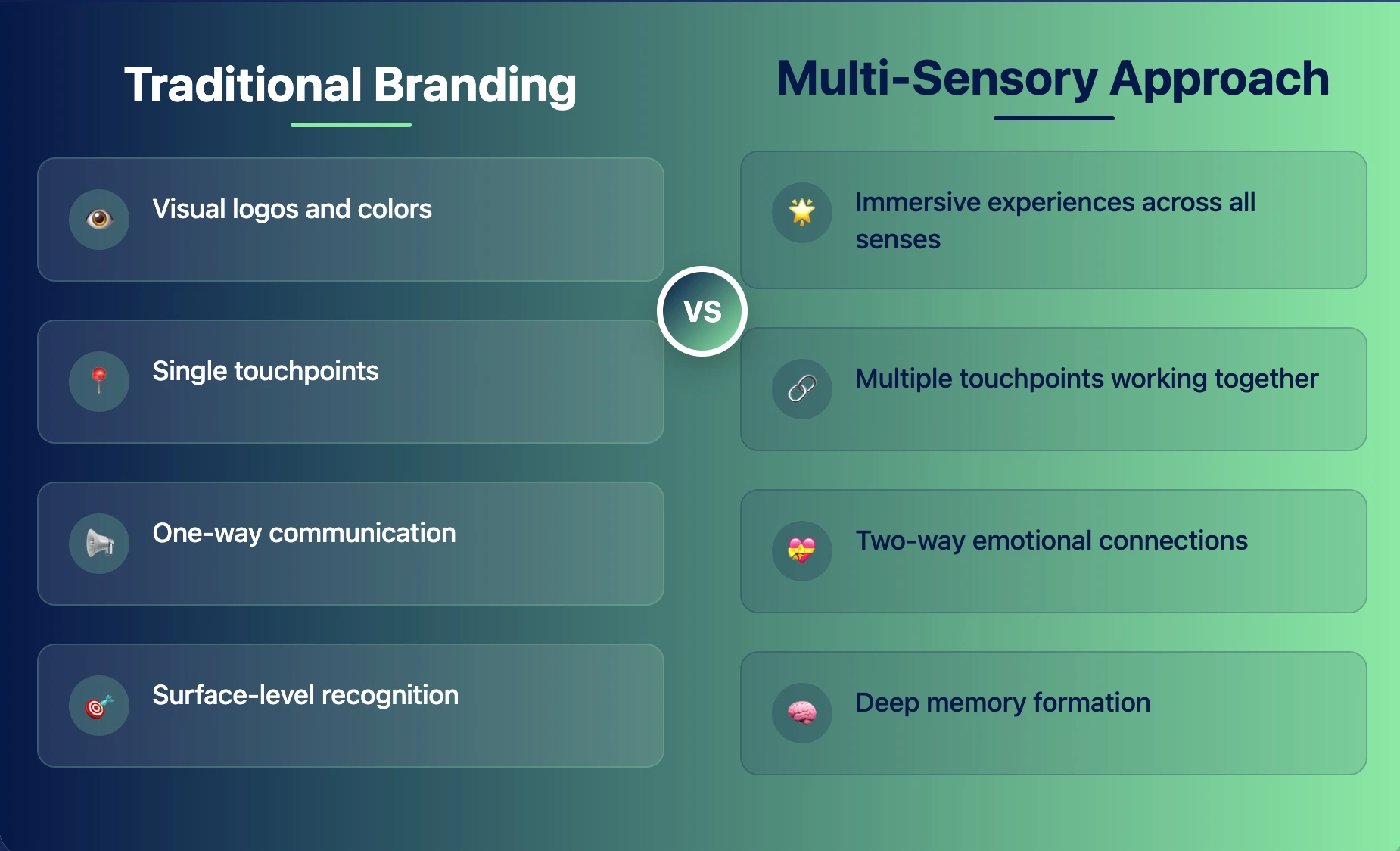
The difference is between knowing a brand exists and feeling like you belong to its world. One creates customers. The other creates communities.
Engaging the Five Senses: The Core of a Multi-Sensory Brand Strategy
Now let's break down how each sense works its magic on your customers. Think of this as your brand's sensory toolkit – each sense is a different instrument, and when you play them together, you create symphonies that stick in people's heads for years.
How Can You Use Sight to Enhance Brand Recognition?
Sight is your first impression – make it count. But we're not talking about slapping your logo everywhere like a desperate dating app notification.
Modern visual strategies focus on food-inspired visuals that trigger emotional responses. Think textures that remind people of comfort foods, colors that evoke specific moods, and lighting that creates atmosphere.
Apple nailed this with their clean, minimalist aesthetic that makes their stores feel like tech temples. Every visual element – from the glass tables to the white walls – reinforces their brand identity of sophisticated simplicity.
What Role Does Sound Play in Shaping Customer Perception?
Sound is your brand's personality speaking. KitKat turned their signature "crack" sound into a marketing symphony, building entire campaigns around the satisfying snap of breaking their chocolate.
Starbucks curates playlists that change throughout the day – upbeat morning tracks, mellow afternoon vibes. They're not just playing background music; they're orchestrating your mood.
Your sound signature could be anything from the notification chime on your app to the playlist in your space. Make it intentional, make it memorable, make it yours.
How Can Smell Influence Emotions and Memory?
Scent is the direct line to your brain's memory center. McDonald's Netherlands proved this with blank red billboards that released the scent of french fries. No visuals needed – just that smell triggering instant brand recognition.
ScentAir's clients report a 20% increase in customer satisfaction scores and an 11% daily increase in retail store sales after adopting scent marketing.
Abercrombie & Fitch's signature scent is so strong, you can smell their stores from the mall corridor. Love it or hate it, you remember it.
Why is Touch Important in Creating a Connection with Your Brand?
Touch creates trust. When customers can physically interact with your brand – whether it's the weight of premium packaging or the smooth texture of your product – they form stronger emotional connections.
Apple's retail strategy banks on this. They want you touching their devices, feeling the build quality, experiencing the interface. It's not just a demo; it's building haptic memories that last.
For e-commerce brands, this means investing in packaging that feels as good as it looks. When unboxing your product feels like unwrapping a gift, you've won.
Can Taste Be a Powerful Tool for Brand Differentiation?
Absolutely. Taste doesn't just apply to food brands – it's about creating experiences people crave.
Research shows that when people are familiar with a brand, they think it tastes better. McDonald's proved this when kids preferred identical foods they believed came from McDonald's versus unbranded packaging.
For non-food brands, taste comes through sampling strategies, flavor partnerships, or even the "taste" of your brand personality – is it bold, subtle, complex, simple?
How to Implement a Multi-Sensory Strategy?
You're sold on the concept, you've seen the success stories, now you want to know: how do you actually pull this off without looking like you're trying too hard? Think of it like curating the perfect playlist – every element needs to work together, but it should feel effortless to your audience. Here's your step-by-step playbook.
What Steps Should You Take to Identify Your Brand's Unique Sensory Experience?
Start with your brand personality. If your brand was a person, what would they sound like? How would they smell? What would their home feel like?
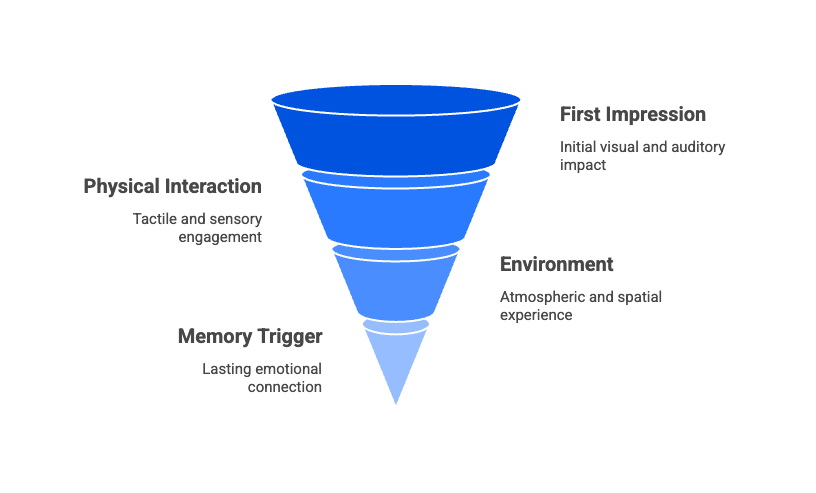
Map your customer journey and identify every sensory touchpoint:
-
First impression (what do they see/hear?)
-
Physical interaction (what do they touch/feel?)
-
Environment (what's the atmosphere?)
-
Memory trigger (what makes them remember you?)
💡Pro tip: Test different sensory elements to see what resonates most with your audience. Use data to refine your approach.
How Can You Integrate Sensory Elements into Your Marketing Campaigns?
This is where the rubber meets the road. You've mapped your sensory touchpoints, now it's time to weave them into campaigns that don't just interrupt people's day – they become the highlight of it.
Think beyond traditional ads. Create experiences that people want to share.
Digital strategies:
-
Use ASMR-inspired content for social media
-
Include haptic feedback in your app
-
Design email campaigns with sensory language
Physical strategies:
-
Signature scents for retail spaces
-
Textured packaging materials
-
Curated soundtracks for customer spaces
Rhode Skin nailed this with their Cinnamon Roll Lip Gloss campaign, using food imagery and nostalgic visuals to create emotional connections beyond just beauty.
What Are Some Practical Examples of Brands Successfully Using a Multi-Sensory Approach?
These brands didn't just dabble in multi-sensory marketing – they went all-in and the numbers prove it worked.
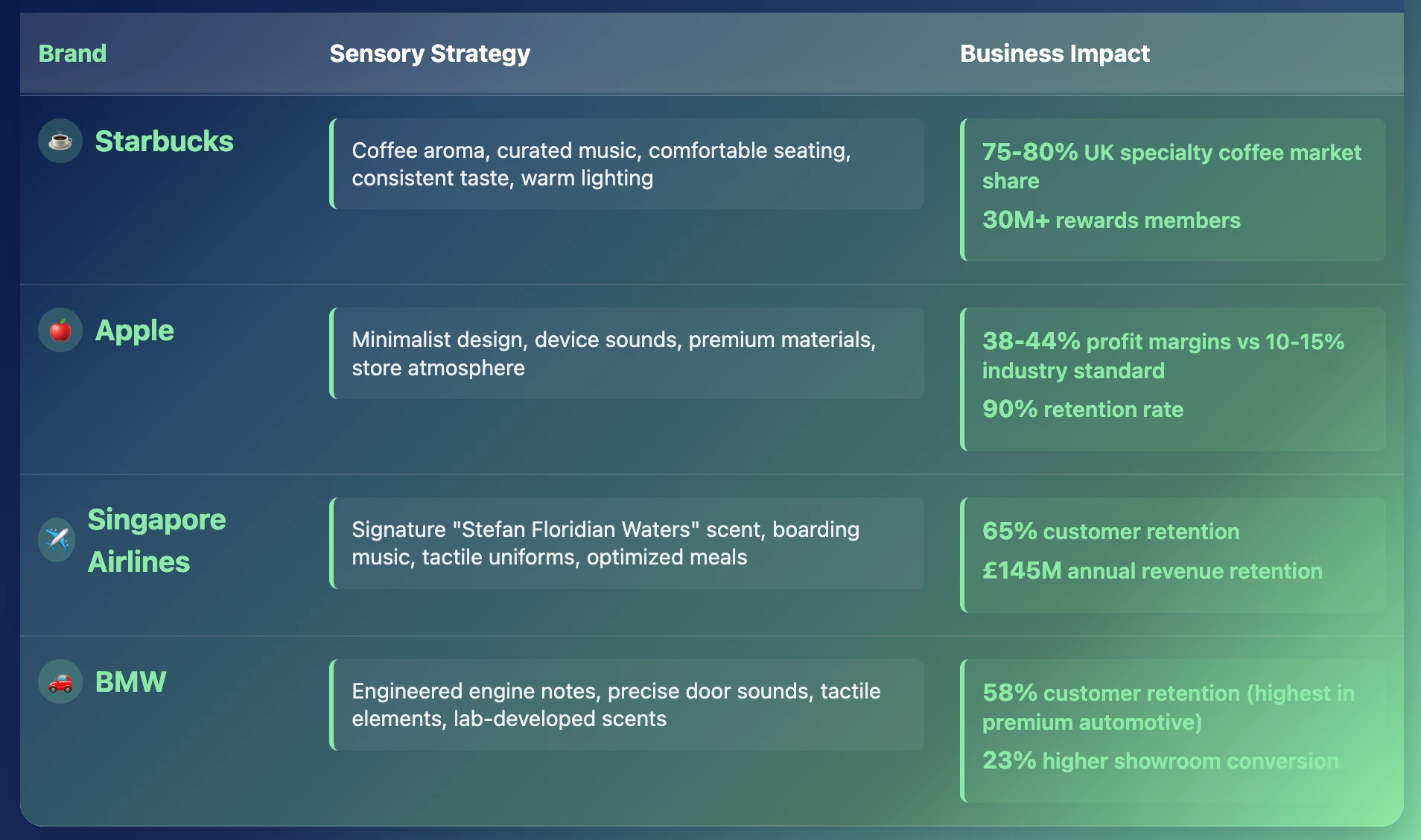
These brands don't just sell products – they sell experiences that customers actively seek out and pay premiums for.
What Challenges Might You Face When Adopting This Approach?
-
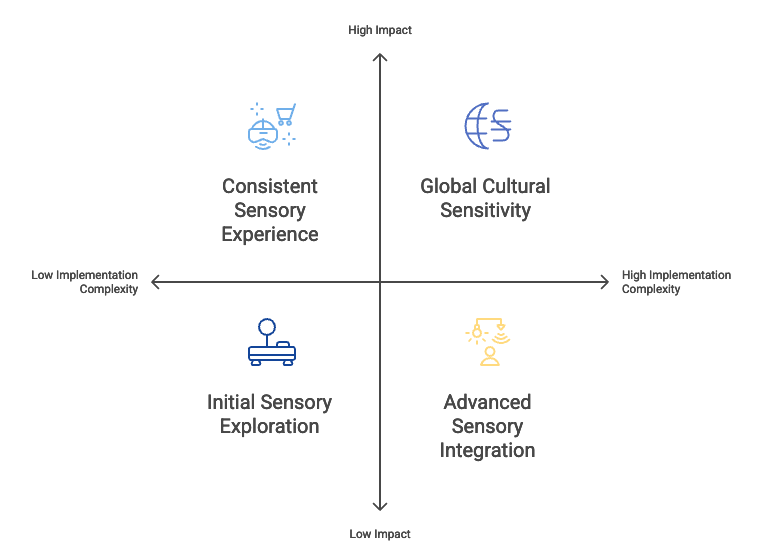
Budget constraints: Multi-sensory experiences require investment. Start small with one or two senses, then expand.
-
Consistency across touchpoints: Your sensory brand needs to work everywhere – online, in-store, in packaging. Mixed messages confuse customers.
-
Cultural sensitivity: Scents and sounds that work in one market might not translate globally. Do your homework.
-
Sensory overload: More isn't always better. Balance is key.
How Can You Measure the Effectiveness of Your Multi-Sensory Strategy?
You can't manage what you don't measure. Your CFO wants numbers, not feelings, so here's how you prove that your sensory investments are paying off.
Track metrics that matter:
-
Brand recall improvements (aim for that 70% boost) - How many people remember your brand without prompting after experiencing your sensory touchpoints
-
Customer dwell time (how long do they stay?) - The minutes people spend in your space or engaging with your content, indicating emotional connection
-
Purchase conversion rates - The percentage jump from browsers to buyers when sensory elements are present versus absent
-
Return customer frequency - How often people come back, because great sensory experiences create habits, not just transactions
-
Social sharing and engagement - When experiences feel good, people can't help but post about them
-
Premium pricing acceptance - Your ability to charge more because customers perceive higher value through sensory engagement
ScentAir's data shows clear ROI: 20% satisfaction increases and 11% daily sales bumps are measurable wins.
What Should You Consider to Avoid Overloading the Customer's Senses?
Less can be more. Focus on 2-3 senses that align with your brand personality rather than bombarding customers with sensory chaos.
Consider your environment: A spa needs calming scents and soft sounds. A gym needs energizing music and fresh air. Context is everything.
Rule of thumb: Each sensory element should reinforce your brand message, not compete with it.
What Are the Future Trends in Multi-Sensory Branding?
The sensory marketing game is evolving faster than your Instagram algorithm. What worked yesterday won't necessarily work tomorrow, and the brands that stay ahead are the ones watching these emerging trends like hawks. Here's what's coming down the pipeline that could change everything.
What Innovations Should Brands Watch Out For?
-
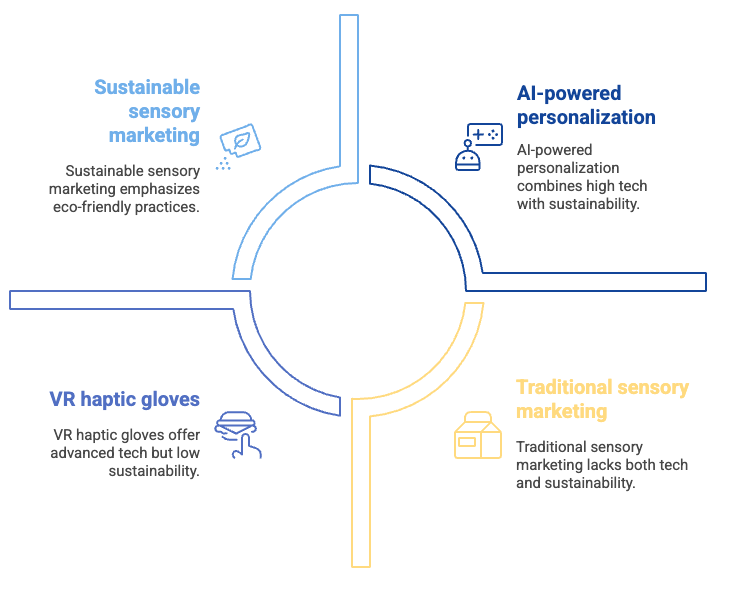
Haptic feedback technology is advancing rapidly. VR haptic gloves and suits are becoming affordable, letting customers "feel" products virtually.
-
AR scent integration is emerging. Imagine trying on cologne through your phone or smelling a new car's interior from your couch.
-
AI-powered personalization will customize sensory experiences. Your music, lighting, and even scents could adapt to your preferences automatically.
-
Sustainable sensory marketing is crucial. Eco-friendly packaging that feels luxurious, natural scents, sustainable materials – customers expect brands to align sensory strategies with values.
Why Should You Invest in a Multi-Sensory Brand Experience?
The numbers don't lie. 72% of consumers want new experiences that engage as many senses as possible. Brands that deliver this aren't just meeting expectations – they're exceeding them.
Multi-sensory brand experiences create customers who don't just buy your product; they choose your world. They're the difference between someone who grabs coffee and someone who "goes to Starbucks."
In a crowded marketplace where everyone's shouting for attention, multi-sensory branding lets you whisper directly into your customers' memories. And trust me – whispers that engage all five senses are the ones that echo the longest.
FAQs
What is a multi-sensory approach in brand experience?
A multi-sensory approach engages customers through multiple senses simultaneously – sight, sound, scent, touch, and taste – creating immersive brand experiences that form stronger emotional connections and enhance memorability.
How can a multi-sensory marketing strategy improve brand recall?
By activating more areas of the brain, multi-sensory experiences create stronger memory pathways. Studies show up to 70% improvement in brand recall when multiple senses are engaged versus single-sense marketing.
What are some examples of sensory experiences in multi-sensory branding?
Starbucks combines coffee aromas with curated music and comfortable seating. Apple stores let you touch and hear their devices in minimalist environments. KitKat built campaigns around their chocolate's signature "crack" sound.
How does immersive technology play a role in creating multi-sensory brand experiences?
Augmented reality and virtual reality technologies, combined with haptic feedback, allow brands to create virtual multi-sensory experiences. Customers can "feel" products through haptic gloves, experience spaces through VR, and even preview scents through AR applications.
Which sense should brands prioritize first when starting out?
When starting out, brands should prioritize the auditory sense, as it can significantly enhance the customer experience. By leveraging auditory stimulus, brands can create an immersive multi-sensory experience that goes beyond the visual, engaging multiple senses and aligning with the brand's values.