Нет доменов в корзине
Кратко
Аудит бренда, ориентированный на доход, рассматривает пять этапов:
-
фундамент (миссия, позиционирование, аудитория),
-
айдентика (визуалы, сообщения),
-
эффективность рынка (известность, SEO, конкуренты),
-
восприятие клиента (анализ тональности),
-
и финансовое влияние (CAC, CLV, ценовая власть).
В отличие от поверхностных аудитов, которые проверяют согласованность логотипа, каждый показатель здесь напрямую связан с выручкой. Ключевое отличие: стандартные аудиты спрашивают: "Выглядит ли наш логотип одинаково везде?", а аудиты, ориентированные на выручку, спрашивают: "Где теряются клиенты и сколько это нам стоит?"
Почему ваш аудит бренда стоит вам денег?

Большинство аудитов проверяют согласованность, не измеряя влияние на выручку — они спрашивают "Одинаково ли выглядит наш логотип везде?" вместо "Где клиенты отваливаются и сколько это нам стоит?"
Вот неприятная правда: большинство аудитов бренда — это приукрашенные упражнения для тщеславия. Они отмечают галочки, создают красивые отчёты и затем пылятся на полке. Они измеряют согласованность, так и не задавая самый важный вопрос: Действительно ли этот бренд приносит нам деньги?
Разница значительна. Компании, поддерживающие единый брендинг на всех платформах, видят до Увеличение выручки на 33%, что значительно больше, чем 10%, о которых сообщалось в их исследовании 2016 года. Тем не менее, более 81% компаний по-прежнему сталкиваются с несоответствующим бренду контентом.
Что именно представляет собой аудит бренда?
Аудит бренда — это систематическая проверка того, как бренд работает на рынке, как его воспринимают клиенты и соответствует ли он бизнес-целям — сравнение вашего внутреннего представления о себе с внешней реальностью.
Каждый аудит бренда рассматривает два ключевых компонента:
-
Внутренняя оценка: Как вы себя видите? Это включает вашу миссию, видение, ценности, сообщения и то, как ваша команда понимает и представляет бренд.
-
Внешняя оценка: Как мир видит вас? Это включает восприятие клиентов, позиционирование на рынке, анализ конкурентов и общественное мнение.
Разрыв между этими двумя точками зрения часто раскрывает наиболее ценные идеи — и самые большие возможности для дохода.
Вот что поможет взглянуть на это в перспективе: практика "branding" уходит корнями в древность. Само слово происходит из древнескандинавского языка "brandr," означает огонь. Клеймение скота восходит к древнему Египту около 2,700 года до н.э., где фермеры клеймили скот, чтобы обозначить право собственности. Эта практика развивалась веками: испанские конкистадоры привезли её в Америку в XVI веке, и в конечном итоге ковбои на американском Западе превратили эту традицию в искусство.
Сегодня, а Исследование Mc Kinsey обнаружили, что 40 самых сильных мировых брендов принесли акционерам почти вдвое больше совокупной доходности по сравнению с индексом MSCI World за 20-летний период. Ваш бренд — это не просто логотип, это один из ваших самых ценных активов. И как любой актив, он требует регулярной оценки.
Действительно ли аудиты бренда ценны или это просто корпоративная имитация бурной деятельности?
"Является ли полный аудит бренда излишним для малого бизнеса? Похоже, это занятия только для гигантских корпораций."
Это один из самых частых вопросов, которые мы слышим, и он заслуживает прямого ответа. Аудит бренда не зависит от размера компании; важно, есть ли у вас клиенты и конкуренты. Если они есть, вам нужно понимать, насколько ваш бренд конкурентоспособен.
Тем не менее, давайте признаем обоснованную критику:
-
Они могут быть дорогими и трудоемкими. Комплексный аудит бренда требует ресурсов — сбора данных, исследования клиентов, конкурентного анализа, внутренних интервью. Для стартапа с ограниченными ресурсами это кажется роскошью.
-
Они могут привести к отчету, который пылится на полке. Мы все это видели. Консультанты выдают красивую презентацию на 100 страниц, все одобрительно кивают — и... ничего не меняется. Аудит становится невозвратными затратами, а не инвестицией.
-
Ловушка "Внутреннего против Внешнего". Слишком многие аудиты переоценивают внутренние взгляды. Видение вашего генерального директора важно, но это не реальность. Реальность — это то, во что верят, что говорят и делают клиенты. Если ваша команда считает ваш бренд премиальным и инновационным, но в отзывах клиентов вас постоянно описывают как "дешевый" и "отсталый," угадайте, какое восприятие влияет на продажи?
Помимо этих практических вопросов, аудит бренда может вскрыть неприятные истины — иногда с серьезными последствиями.
Канарейка в угольной шахте
Рассмотрите Nestlé, которая десятилетиями подвергалась тщательной проверке своей деловой практики. Аудиты брендов и внешние оценки неоднократно выявляли этические проблемы в их цепочке поставок — от обвинений в маркетинге детских смесей в развивающихся странах до проблем с детским трудом при производстве какао. Несмотря на заявленную приверженность компании этичному sourcing, Аудит Fair Labor Association выявил "multiple serious violations" собственного кодекса поставщиков Nestlé. Эти аудиты служили системой раннего предупреждения, выявляя разрывы между заявленными ценностями и реальной практикой.
Корпоративная вражда
Аудиты брендов также могут стать полем битвы в корпоративных борьбах за власть. Текущий конфликт между Ben & Jerry's и его материнской компанией Unilever наглядно это иллюстрирует. Когда Unilever приобрела Ben & Jerry's в 2000 году, соглашение о слиянии создало независимый совет для защиты социальной миссии бренда мороженого и его "важнейшей целостности бренда."
С тех пор отношения значительно ухудшились. Ben & Jerry's неоднократно подавал в суд на Unilever , последнее время утверждая, что Unilever цензурировала активность в соцсетях и уволила своего генерального директора за приверженность социальной миссии бренда. Конфликт перерос в то, что компания по производству мороженого назвала "новыми уровнями угнетения" со стороны Unilever — суровое напоминание о том, что аудиты бренда и вопросы идентичности могут стать косвенными признаками более глубоких организационных напряжений.
Суть: Аудиты становятся бессмысленной работой только в том случае, если вы позволяете им таковыми быть. Риск не в том, чтобы провести аудит, а в том, чтобы провести его плохо.
Контрольный список бренд-аудита, ориентированного на доход

Это основа вашего аудита. В отличие от общих чек-листов по бренду, каждый шаг здесь напрямую связан с метрикой, влияющей на выручку: стоимость привлечения клиента (CAC), пожизненная ценность клиента (CLV), коэффициенты конверсии и рентабельность.
Этап 1: Достаточно ли прочен фундамент вашего бренда?
Прежде чем изучать, как ваш бренд выглядит и звучит, вам нужно оценить, может ли его фундамент действительно поддерживать бизнес, который вы хотите построить.
Аудит миссии, видения и ценностей
-
Соответствуют ли ваши заявленные ценности тому, за что клиенты на самом деле платят?
-
Когда вы читаете свою миссию, можете ли вы чётко установить связь с получением дохода?
-
Понимают ли сотрудники эти ценности и воплощают ли их в общении с клиентами?
Связь с выручкой: Рассогласованные ценности создают трение на протяжении всего пути клиента. Если вы заявляете, что цените обслуживание клиентов, но регулярно не отвечаете на тикеты поддержки, клиенты это замечают — и уходят.
Ценностное предложение и позиционирование
-
Достаточно ли уникально ваше позиционирование, чтобы устанавливать премиальную цену?
-
Можете ли вы в одном предложении сформулировать, почему клиент должен выбрать вас, а не конкурентов?
-
Находит ли ваше позиционирование отклик у клиентов, у которых есть и бюджет, и мотивация для покупки?
Связь с выручкой: Сильный бренд позволяет устанавливать премиальные цены. Исследование Mc Kinsey показало, что ведущие промышленные бренды могут устанавливать цену на 5–10 процентов выше конкурентов, что напрямую влияет на рентабельность.
Определение целевой аудитории
-
Есть ли у вас подробные и проверенные портреты клиентов?
-
Вы общаетесь с людьми, которые действительно могут позволить себе ваш продукт или услугу?
-
Достаточно ли конкретно описана ваша аудитория, чтобы направлять маркетинговые решения?
Связь с выручкой: Маркетинг для неправильной аудитории раздувает стоимость привлечения клиента (CAC), принося клиентов с более низкой пожизненной ценностью.
Этап 2: Действительно ли ваша айдентика бренда помогает продавать больше?
Ваша визуальная и вербальная идентичность — это не только эстетика; это то, узнают ли вас клиенты, доверяют ли вам и в конечном итоге выбирают ли вас.
Оценка визуальной идентичности
-
Согласованы ли ваш логотип, цветовая палитра и визуальный стиль во всех точках взаимодействия?
-
Могут ли клиенты узнать ваш бренд, не видя вашего имени?
-
Эффективно ли работает ваша визуальная идентичность в цифровых и физических каналах?
Связь с выручкой: Визуальная несогласованность подрывает доверие и вредит продажам. Когда клиенты сталкиваются с разными версиями вашего бренда, они ставят под сомнение ваш профессионализм и надежность.
Тон голоса и сообщения
-
Побуждают ли ваши сообщения к действию и конверсиям?
-
Согласован ли тон на вашем сайте, в рекламе, соцсетях и обслуживании клиентов?
-
Проанализируйте свои показатели открываемости писем и кликов — убедительно ли ваше сообщение?
Связь с выручкой: Анализируйте коэффициенты конверсии на каждом этапе воронки. Где сообщение не продвигает клиентов на следующий шаг?
Ребрендинг Uber в 2016 году служит предостережением. Компания попыталась перепозиционироваться с новой визуальной идентичностью, включающей абстрактные "биты и атомы," но сообщение было слишком сложным для понимания пользователями. Новый логотип было трудно разглядеть на телефонах — серьёзная проблема, когда клиенты пытаются заказать поездку поздно ночью. Ребрендинг был так плохо принят что Uber полностью сменил бренд в 2018 году под руководством нового генерального директора Дара Хосровшахи, отдавая приоритет простоте и узнаваемости.
Урок: айдентика бренда существует, чтобы обслуживать клиентов, а не удовлетворять внутренние творческие амбиции.
Этап 3: Насколько хорошо ваш бренд работает на рынке?
Ваш бренд не существует в вакууме. Понимание вашего относительного положения помогает выявить как угрозы, так и возможности.
Измерение узнаваемости бренда
-
Каков объём брендовых запросов по сравнению с конкурентами?
-
Рассчитайте свою долю голоса (SOV) — сколько разговоров в вашей категории касаются вашего бренда?
-
Отслеживайте подсказанную и спонтанную узнаваемость бренда в вашей целевой аудитории.
Связь с выручкой: Более высокая узнаваемость снижает стоимость привлечения клиентов. Тем, кто уже знает вас, требуется меньше убеждения для конверсии.
Эффективность сайта и SEO
-
Каковы ваши тенденции трафика, показатели отказов и коэффициенты конверсии?
-
Где люди отваливаются в воронке?
-
Как вы ранжируетесь по ключевым брендовым и категорийным запросам?
Связь с выручкой: Найдите конкретные места, где потенциальный доход уходит из вашей воронки.
Анализ конкурентов
-
Что делают конкуренты, чтобы отнять вашу долю рынка?
-
Где есть пробелы в позиционировании, которые вы можете использовать?
-
Как их сообщения и ценностные предложения соотносятся с вашими?
Связь с выручкой: Понимание конкурентной динамики помогает выявить возможности для дифференциации и захвата доли рынка.
Этап 4: Что на самом деле думают ваши клиенты?
"Наша команда считает, что наш бренд — X, но отзывы клиентов говорят, что Y. Кого нам слушать?"
Клиенты. Всегда клиенты. Их восприятие — ваша реальность.
Анализ восприятия и настроений
-
Что на самом деле говорят о вас клиенты на сайтах с отзывами, в социальных сетях и на форумах?
-
Используйте инструменты анализа настроений, чтобы оценить количество позитивных и негативных упоминаний.
-
Отслеживайте тенденции настроений с течением времени — улучшается ли ситуация или ухудшается?
Связь с выручкой: Позитивные настроения ведут к более высокой удержанию и рекомендациям. Негативные настроения увеличивают отток и затраты на привлечение.
Этап 5: Насколько сильна финансовая отдача от вашего бренда?
Этот этап связывает всё с конечным результатом.
Рост продаж и выручки
-
Продажи растут или падают?
-
Как менялся рост с течением времени, и можете ли вы связать изменения с активностью бренда?
-
Какой процент дохода поступает из каналов, движимых брендом (органические, прямые, реферальные), по сравнению с платными каналами?
Связь с выручкой: Это прямой показатель того, работает ли ваш бренд.
Стоимость привлечения клиента (CAC)
-
Сколько стоит привлечь клиента через каждый канал?
-
Как CAC менялся с течением времени?
-
Сравните CAC и CLV — оправдывает ли каждый клиент стоимость привлечения?
Связь с выручкой: Сильные бренды привлекают клиентов органически, снижая CAC. Если ваш CAC растет, а показатели бренда остаются на месте, ваш бренд не выполняет свою работу.
Прибыльность и ценовая власть
-
Можете ли вы устанавливать премиальные цены по сравнению с конкурентами?
-
Какова ваша норма прибыли по каждой линейке продуктов или услуг?
-
Платят ли клиенты регулярно полную цену или вы полагаетесь на скидки?
Связь с выручкой: Способность сохранять цены без потери клиентов — это прямой показатель силы бренда.
Как превратить результаты аудита бренда в действия, приносящие доход
Организуйте выводы с помощью SWOT-анализа, в первую очередь расставляйте приоритеты для инициатив с высокой отдачей и низкими затратами, назначайте ответственных и сроки для каждого пункта действий и планируйте ежеквартальные обзоры.
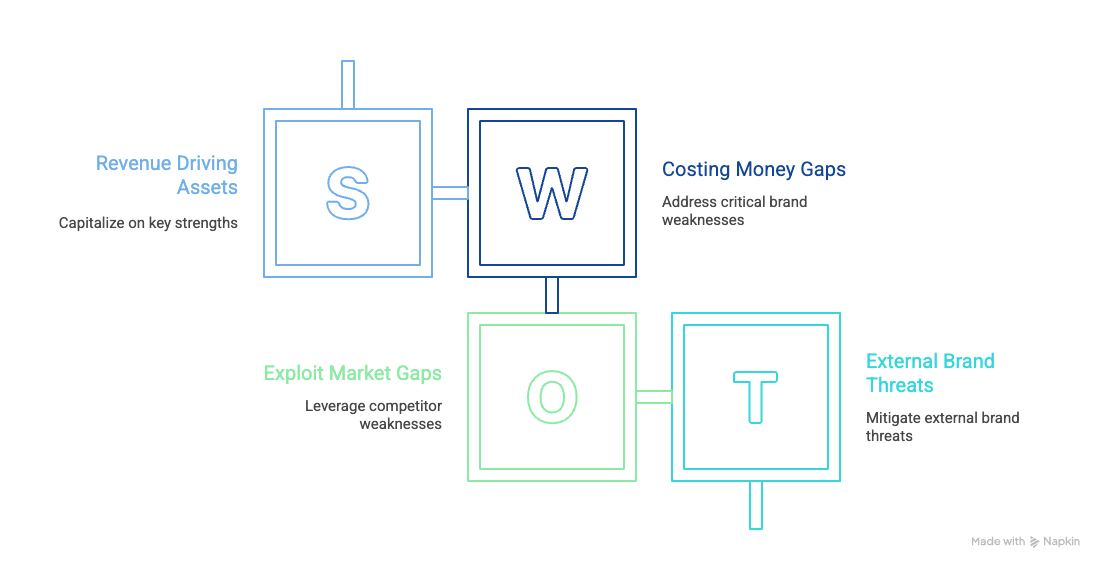
Организуйте выводы с помощью SWOT-анализа
Структурируйте выводы на основе сильных сторон, слабостей, возможностей и угроз. Эта классическая модель помогает расставить приоритеты и донести результаты до команд.
-
Сильные стороны: Какие брендовые активы приносят доход? Сосредоточьтесь на них.
-
Слабые стороны: Какие пробелы в бренде обходятся вам в деньги? Их нужно исправить.
-
Возможности: Какие рыночные пробелы или слабости конкурентов вы можете использовать?
-
Угрозы: Какие внешние факторы — конкурентные, технологические, регуляторные — угрожают вашей позиции бренда?
Расставляйте приоритеты безжалостно
Вы не можете исправить все сразу. Используйте простую матрицу приоритизации:
| Низкие усилия |
Высокие усилия |
|
| Высокое влияние на доход |
Сначала делай |
Планируйте тщательно |
| Низкое влияние на доход |
Делайте, если позволяет время |
Не делать |
Сосредоточьте ресурсы сначала на высокоэффективных и менее затратных инициативах. Быстрые победы создают импульс и доказывают ценность процесса аудита.
Создайте дорожную карту с четкой ответственностью
Каждый пункт действий требует трех вещей:
-
Владелец: Кто отвечает за эту инициативу?
-
Крайний срок: Когда это будет завершено?
-
KPI: Как мы узнаем, сработало ли это?
Планируйте регулярные обзоры
Аудит бренда — это не разовое мероприятие, а постоянная практика. Планируйте ежеквартальные обзоры ключевых метрик бренда и ежегодные комплексные аудиты, чтобы отслеживать прогресс и выявлять возникающие проблемы.
Заключение
Аудит бренда — это не маркетинговая задача, а ключевая бизнес-стратегия для роста выручки. Компании, которые относятся к бренду как к стратегическому активу, стабильно превосходят тех, кто считает брендинг второстепенным делом.
Сосредоточившись на метриках, которые напрямую влияют на продажи и лояльность — CAC, CLV, конверсия, удержание и рентабельность — вы превращаете бренд в предсказуемый двигатель прибыли, а не в нематериальную концепцию, которую трудно обосновать.
Являетесь ли вы стартапом, который сомневается, не "перебор" ли это всё, или крупной компанией, задающейся вопросом, почему прошлый аудит не привёл к изменениям, ответ один: проводите аудит с прицелом на выручку, безжалостно расставляйте приоритеты и несите ответственность за результаты.
Часто задаваемые вопросы
Как часто следует проводить аудит бренда?
Минимум ежегодно. Также проводите его при серьезных изменениях, таких как слияния, новые продукты, расширение рынка или заметное падение продаж или настроений клиентов.
Могу ли я провести аудит бренда самостоятельно или стоит нанять агентство?
Сделать самостоятельно можно, если у вас есть маркетинговый опыт и вы способны сохранять объективность. Нанимайте агентство (от $15K до $25K для малого бизнеса), когда нужен независимый взгляд, не хватает внутренней экспертизы или вы готовитесь к ребрендингу.
Чем отличается аудит бренда от маркетингового аудита?
Аудит бренда оценивает восприятие и позиционирование — как вас видят клиенты. Аудит маркетинга оценивает тактику — эффективны ли кампании и расходы. Они дополняют друг друга; проблемы с брендом часто объясняют, почему хороший маркетинг показывает низкие результаты.
Моя команда считает, что наш бренд сильный, но продажи не растут. Кто прав?
Ваши клиенты правы. Внутреннее восприятие не является реальностью—клиентское восприятие движет продажами. Используйте анализ тональности и опросы клиентов, чтобы выявить разрыв между тем, каким вы считаете свой бренд, и тем, что на самом деле испытывают клиенты.
Что мне делать, если аудит выявит серьёзные проблемы?
Не пытайтесь исправить всё сразу. Выберите 2–3 приоритетных направления с высоким эффектом и низкими затратами, назначьте ответственных и сроки, установите измеримые KPI и пересматривайте их ежеквартально. Быстрые победы создают импульс для более масштабных изменений.