Nema domene u korpi
The difference between a million-dollar domain win and a costly mistake often comes down to one critical skill: accurate brandable domain evaluation. In 2025, Icon.com sold for a staggering $12 million to an AI startup positioning itself as "the world's first AI CMO," proving that brandable domains can command premium valuations when properly assessed.
Traditional domain valuation methods fail spectacularly when applied to brandable domains because they focus on outdated metrics like exact keyword matches and search volume. Brandable domains derive their value from entirely different factors: linguistic appeal, commercial adaptability, trademark potential, and the psychological resonance that transforms invented words into billion-dollar brands.
This guide introduces a systematic framework that removes guesswork from brandable domain evaluation, helping you identify genuine opportunities while avoiding the costly mistakes that keep most domains unsold.
The 2025 Brandable Evaluation Framework

Professional brandable domain evaluation requires a systematic approach that assigns numerical scores across four critical criteria, creating a 100-point assessment system that eliminates subjective guesswork. This framework prioritizes the factors that actually drive brandable domain sales in today's startup-dominated market, where venture-backed companies pay premium prices for domains that support their brand-building objectives.
1. Phonetic Appeal (30 Points Maximum)
The Phonetic Appeal criterion carries the highest weight because pronunciation ease directly impacts a domain's memorability and word-of-mouth potential. Domains that flow naturally when spoken aloud, avoid difficult consonant clusters, and create pleasing rhythmic patterns score higher because they're more likely to stick in customers' minds.
Scoring factors include:
-
Pronunciation clarity and ease
-
Rhythmic flow between syllables
-
"Radio test" performance (can someone spell it after hearing it once)
-
Absence of awkward letter combinations
Example: A domain like "Tech Flow.ai" would score well here because both syllables are simple, the combination flows smoothly, and the name passes the crucial radio test. Conversely, invented names with awkward letter combinations score poorly because they create friction in real-world usage.
Note: Domain examples throughout this guide are hypothetical illustrations used to demonstrate evaluation principles and do not represent actual sales data or verified case studies unless specifically sourced.
2. Commercial Viability (25 Points Maximum)
Commercial Viability evaluates whether the domain name aligns with actual business needs and market demands. This criterion examines target audience appeal, industry relevance, and the name's ability to convey appropriate brand positioning.
Key evaluation areas:
-
Target audience alignment
-
Industry relevance and positioning
-
Market segment appeal (B2B vs B2C)
-
Geographic and cultural considerations
Example: "Cloud Pulse.io" might score highly for B2B technology companies but poorly for consumer retail brands, while "Fresh Cart.com" could excel in e-commerce but fail in professional services.
3. Trademark Safety (25 Points Maximum)
Trademark Safety assesses the likelihood of legal conflicts that could destroy a domain's value overnight. This goes beyond simple database searches to include phonetic similarity analysis and evaluation of how closely the domain resembles existing brands.
Critical assessment points:
-
Direct trademark database conflicts
-
Phonetic similarity to existing brands
-
Industry proximity to established trademarks
-
International trademark considerations
The recent increase in trademark disputes makes this criterion increasingly important, as domain owners who lose legal cases often forfeit their entire investment plus legal fees.
4. Brandability Factor (20 Points Maximum)
The Brandability Factor measures the domain's unique qualities that support long-term brand development. This criterion evaluates memorability, visual appeal, scalability, and the potential for creating emotional connections.
Evaluation components:
-
Memorability and distinctiveness
-
Visual appeal in logos and marketing materials
-
Scalability across product lines
-
Emotional resonance potential
Multi-Domain Comparison Process
When comparing multiple domains, follow this systematic approach:
-
Apply the scoring framework to each option across all four criteria
-
Calculate weighted totals based on your specific priorities
-
Create a comparison matrix listing candidates side-by-side
-
Consider tie-breaking factors like acquisition cost and holding time
Prema Brand Bucket data, the average sale time is "a little over 6 months", but domains scoring above 75 points typically sell faster and command higher prices because they appeal to a broader range of potential buyers.
Current Market Forces Reshaping Brandable Values
The artificial intelligence boom has fundamentally transformed how brandable domains should be evaluated, with tech-adjacent names commanding premium valuations that would have seemed impossible just three years ago.
This trend extends beyond obvious AI terminology to include any brandable domains that could credibly represent cutting-edge technology companies, data platforms, or intelligent software solutions.
Key Market Trends Affecting Evaluation:
Extension Evolution:
-
.AI domains have established premium positioning in tech sectors
-
.IO domains gained credibility in startup and developer communities
-
.COM domains still command significant premiums in most industries
-
Geographic extensions (.CO.UK, .DE) are gaining regional value
Note: Extension performance observations are based on general market trends and should be verified with current sales data for specific investment decisions.
Industry-Specific Multipliers:
-
Fin Tech domains: Higher valuations due to customer lifetime values and regulatory barriers
-
AI and deep technology: Premium pricing from venture funding and market dynamics
-
Healthcare domains: Elevated values from industry consolidation and compliance requirements
-
E-commerce brands: Sustained demand from digital commerce growth
Geographic Considerations:
-
International market expansion drives global-friendly domain demand
-
Shorter, invented brandables avoid cultural conflicts and translation issues
-
Cross-language appeal increases Commercial Viability scores significantly
These market forces should directly influence your Commercial Viability scoring, as domains targeting high-demand industries justify premium acquisition costs that would be unrealistic in lower-value sectors.
Common Evaluation Mistakes That Cost Investors Thousands

Understanding systematic evaluation failures helps prevent the costly mistakes that keep potentially valuable domains unsold for years. These common pitfalls destroy more domain investment returns than any other factors.
1. The Emotional Evaluation Trap
Personal preference creates dangerous blind spots that prevent accurate Commercial Viability assessment, leading investors to purchase domains that reflect their own aesthetic tastes rather than market demands. This mistake becomes particularly costly with brandable domains because their subjective nature makes it easy to rationalize poor choices.
Prevention strategies:
-
Always complete systematic scoring before considering personal preferences
-
Seek feedback from target industry professionals
-
Test domain appeal with potential buyer demographics
-
Focus on market needs rather than personal aesthetics
2. Overvaluation and Unrealistic Pricing
Unrealistic price expectations based on flawed evaluation prevent otherwise reasonable domains from finding buyers willing to pay fair market value. This problem compounds over time as holding costs accumulate and market trends shift away from overpriced inventory.
Smart pricing approaches:
-
Research comparable sales in similar categories
-
Consider acquisition costs and holding time in pricing decisions
-
Set prices that align with buyer behavior rather than seller hopes
-
Review and adjust pricing annually based on market conditions
3. Over-Reliance on Automated Tools
Automated tools struggle with the subjective factors that drive invented name valuations because software cannot assess phonetic appeal, cultural resonance, or brand positioning potential that human evaluators recognize instinctively.
Tool usage guidelines:
-
Use automated appraisals as starting points, not final valuations
-
Combine multiple tool estimates for a broader perspective
-
Apply human judgment to assess linguistic and cultural factors
-
Consider a professional evaluation for domains exceeding $10,000 in expected value
4. Timeline Expectation Errors
Many investors expect brandable domains to sell within 3-6 months, when quality domains typically require longer periods to find appropriate buyers. This mismatch between expectations and reality causes investors to panic-sell valuable domains at fractions of their potential value.
Realistic timeline planning:
-
Budget for 6-18 month holding periods for quality brandables
-
Plan premium domain sales over 12-36 month timeframes
-
Include holding costs in total investment calculations
-
Maintain patience for market development and buyer discovery
Red Flags During Evaluation
Avoid domains with these characteristics:
-
Difficult pronunciation or awkward letter combinations
-
Negative cultural associations or unintended meanings
-
Close similarity to major existing trademarks
-
Excessive length that resists memorization
-
Invented spellings that create confusion rather than distinctiveness
Real-World Evaluation Success Stories
Systematic evaluation frameworks enable domain investors to identify valuable opportunities that emotional or intuitive assessment methods would overlook entirely. These success stories demonstrate how proper evaluation can predict commercial success before market trends become obvious to casual observers.
Portfolio Transformation Results
Investors who abandon gut-feeling approaches in favor of systematic evaluation report dramatically improved return rates and reduced holding periods. The improvement typically comes from focusing acquisition efforts on domains that score well across multiple criteria rather than chasing personal favorites that lack broad commercial appeal.
Common improvements include:
-
Higher annual sales rates from portfolio holdings
-
Improved average sale prices compared to emotional buying decisions
-
Reduced holding costs through faster inventory turnover
-
Better alignment between acquisition costs and market values
Learning from Unexpected Outcomes
Even systematic evaluation occasionally produces surprising outcomes, as demonstrated by domains that scored poorly on initial assessment but found niche buyers willing to pay premium prices for highly specific applications.
These exceptions prove that evaluation frameworks should guide decisions rather than replace market testing, as unusual buyer needs sometimes create value that standard criteria cannot predict.
However, these outliers represent a small percentage of total sales volume, making systematic evaluation the superior approach for building profitable domain portfolios over time.
Implementation: Start Evaluating Like a Pro
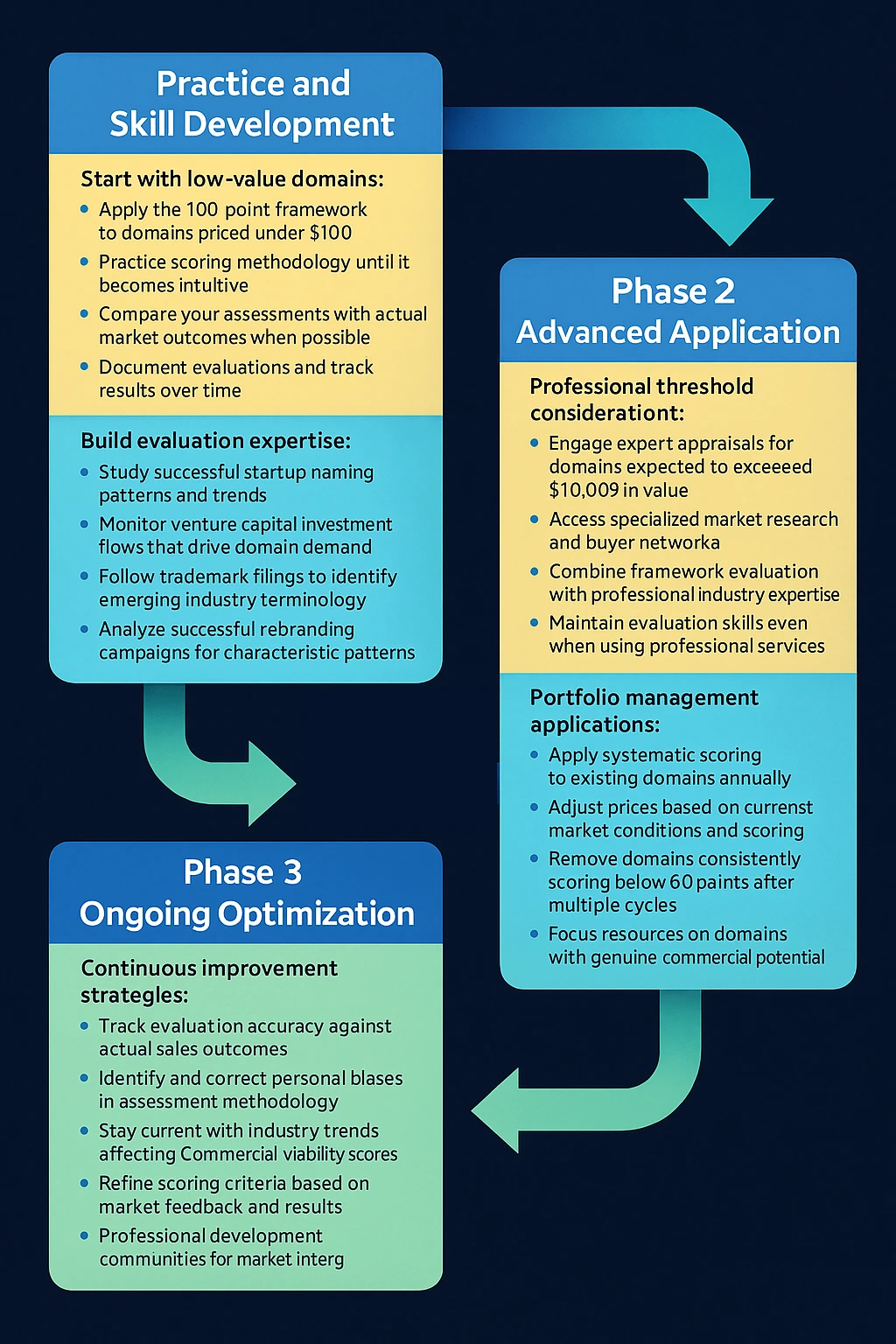
Effective brandable domain evaluation requires systematic practice beginning with low-stakes domains that provide learning opportunities without risking significant capital on evaluation mistakes. This structured approach builds expertise while limiting downside risk.
Zaključak
Successful brandable domain evaluation requires a systematic methodology that combines objective scoring criteria with current market intelligence and realistic expectations. The 100-point framework presented in this guide addresses the critical factors driving brandable domain sales while helping investors avoid the emotional traps and evaluation mistakes that destroy portfolio returns.
Key takeaways for implementation:
-
Apply systematic scoring across all four criteria before making investment decisions
-
Stay current with market trends that affect Commercial Viability assessments
-
Maintain realistic timelines for sales development and buyer discovery
-
Focus on quality over quantity when building brandable domain portfolios
The brandable domain market rewards investors who master both quantitative evaluation techniques and qualitative market understanding.
By combining the systematic framework with ongoing market research and disciplined portfolio management, you can identify genuine opportunities while avoiding the costly mistakes that prevent most domains from ever finding buyers.